

- SHOP
- EXPLORE
- ABOUT
- Sign in


-
SHOP
-
EXPLORE
- ABOUT
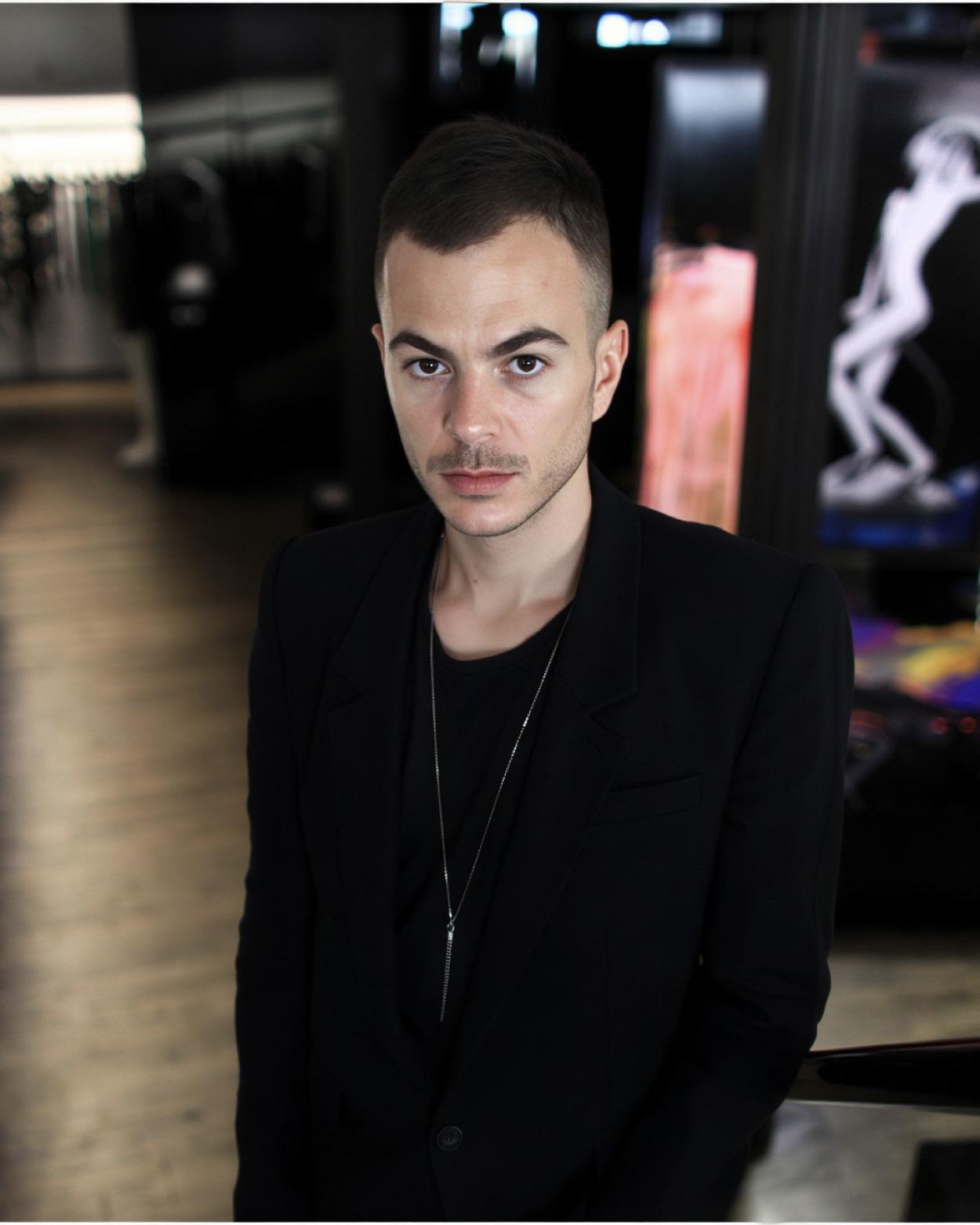
Joseph Quartana in front of his shop Seven New York, 2005.

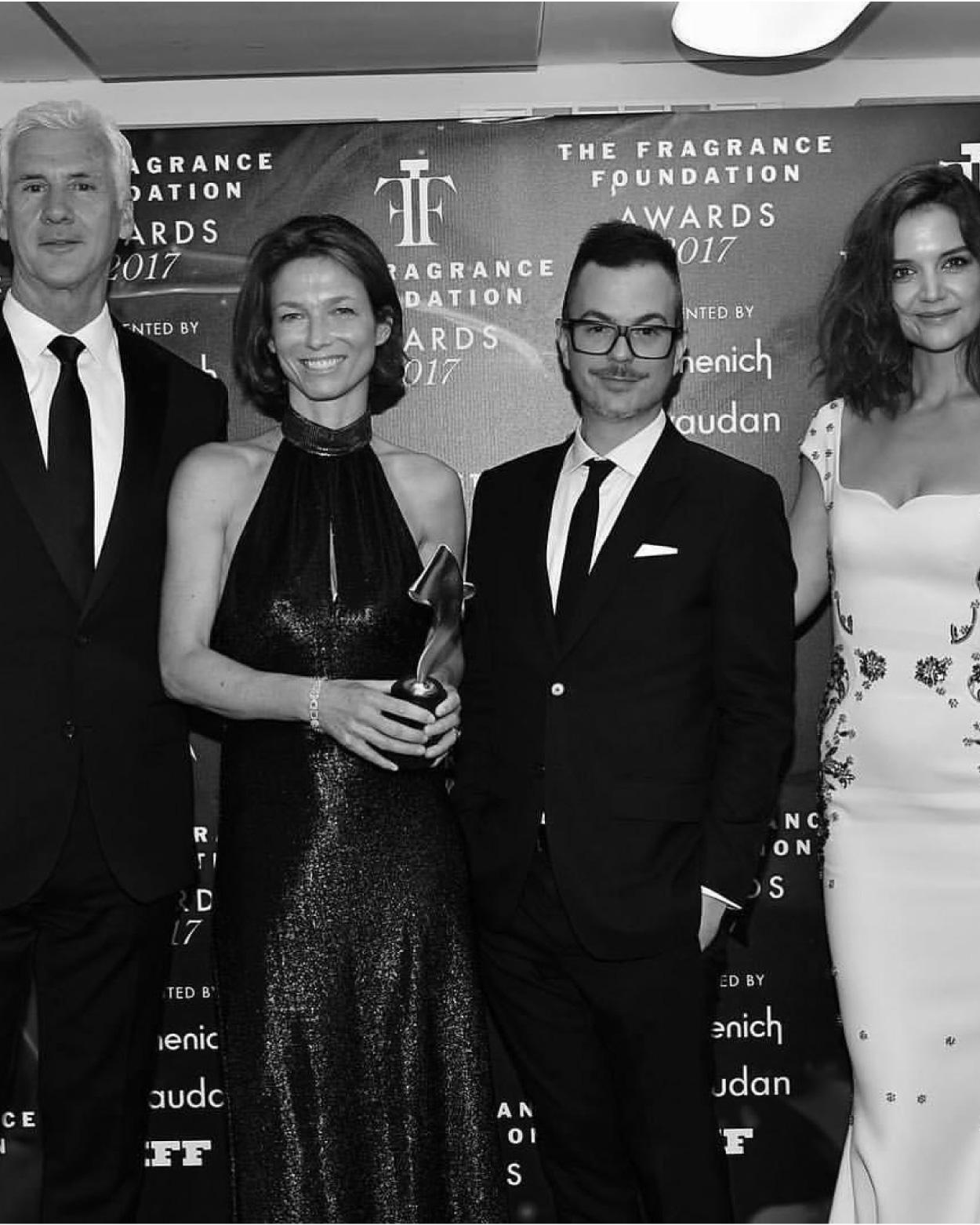
Perfumers David Apel and Emilie Coppermann with Joseph Quartana accept the Fragrance Foundation's Perfume Extraordinaire blindjudged prize from celebrity Katie Holmes
On the night Poppy Soma won The Fragrance Foundation’s Perfume Extraordinaire award, Joseph Quartana crossed the threshold between triumph and death.
The fragrance came from Les Potions Fatales, his collection of perfumes built around poisonous flowers and the beauty of dangerous transformation. Poppy Soma had been judged blind, with the bottle and brand stripped away so the scent could speak on its own. In a perfume world often driven by image, brand power, and commercial scale, that mattered. The award recognized the composition itself: the world inside the formula.
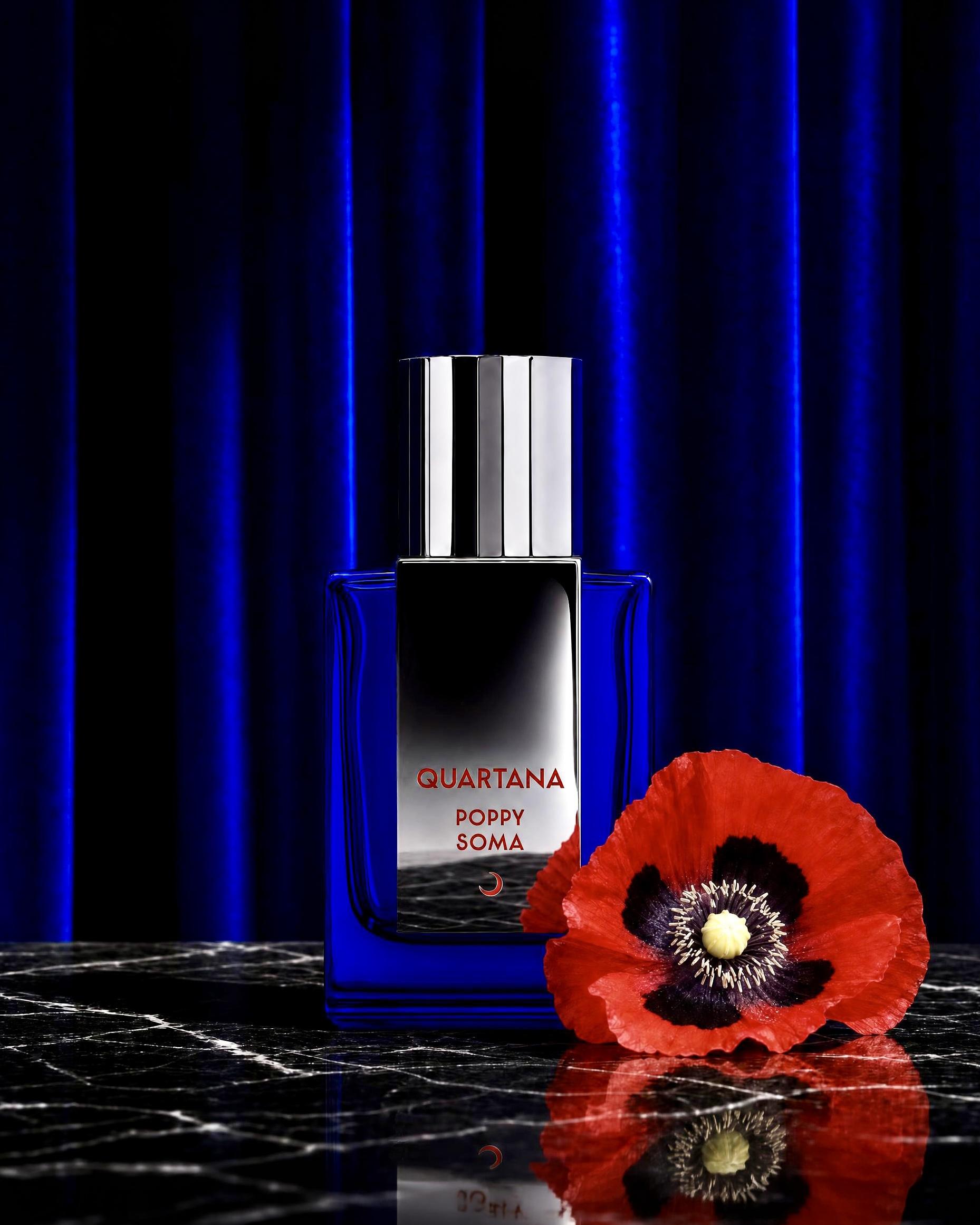
Poppy Soma extrait de parfum in 50mL bottle
Poppy Soma’s world is lunar and charged. The poppy itself gives the clue: a flower that announces its own effect, a bloom whose milky sap carries the promise of altered consciousness. Joseph imagined that flower as a threshold rather than a decoration. Its red body, pale halo, and dark center suggested a blood moon or eclipse. The image held several forces at once: intoxication, erotic current, oblivion, and return. The perfume became a moon-threshold where narcotic white flowers, spice, smoke, and skin turn desire into illumination.

Joseph Quartana in a hospital bed at NYU Langone post life-saving surgery, hours after accepting the Fragrance Foundation Perfume Extraordinaire blindjudged award.
By noon the next day, Joseph woke in the emergency room, tubes down his throat, the horror of the reality slowly engulfing him. The ceremony seemed impossible. Had the award happened, or had it folded into this nightmare? The doctor gave the scene its brutal clarity. Joseph had survived what should have left him for dead on the floor of his apartment, and the perfume had won.
That quotation could stand over the whole house.
PARFUMS QUARTANA is the inevitable conclusion of Joseph Quartana’s lifelong practice: making atmosphere tangible.
Before perfume became his central medium, Joseph learned how to build a sacred space.
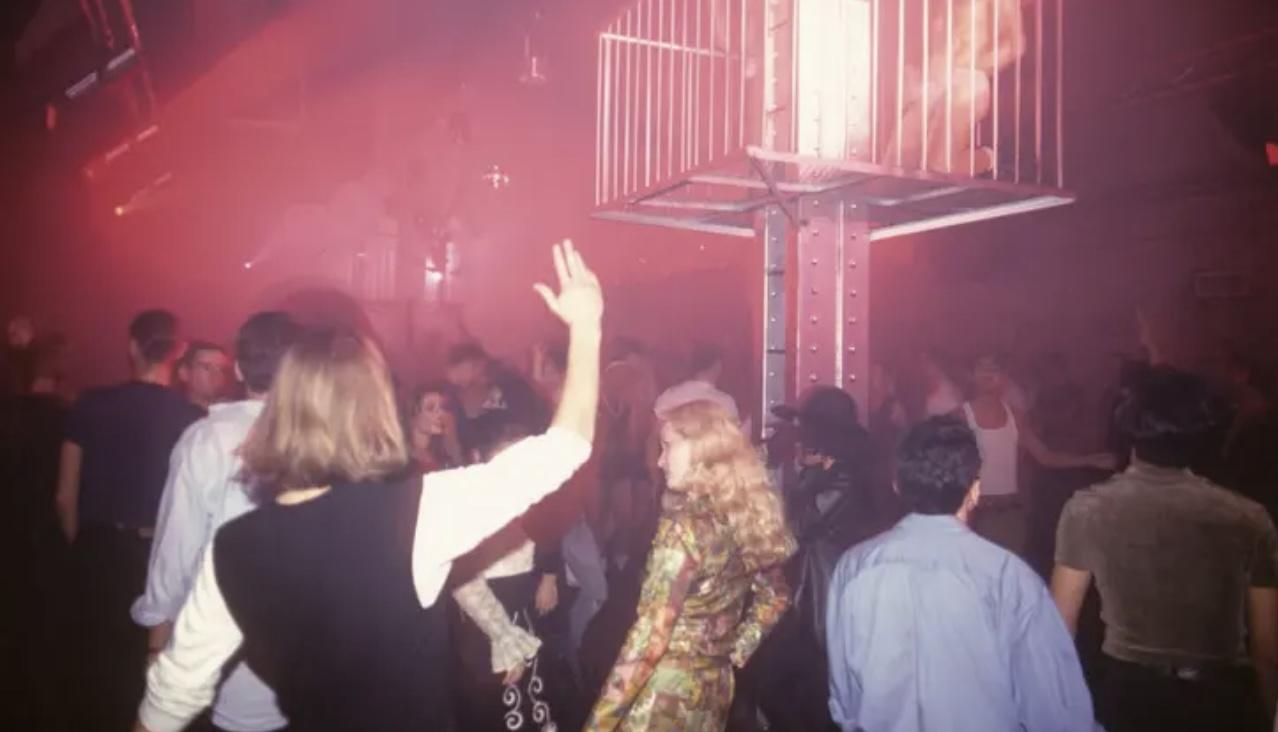
The Tunnel night club dance floor circa 1994. Photo by Steve Eichner.
The Tunnel was a discotheque, but that word barely holds what it became in Peter Gatien’s New York. It occupied the former Terminal Warehouse freight building on West 27th Street, a long industrial structure whose tracks and tunnel-like rooms made the club feel less like a venue than a city hidden inside a warehouse. By the 1990s, under Gatien’s superclub empire, The Tunnel had become one of the places where pre-web nightlife generated its own mythology. There was no feed to preview the room, no phone camera to flatten the night in real time, no algorithm to sort the tribes. The line, the flyer, the rumor, the DJ, the door, and the bodies in the room carried the culture.
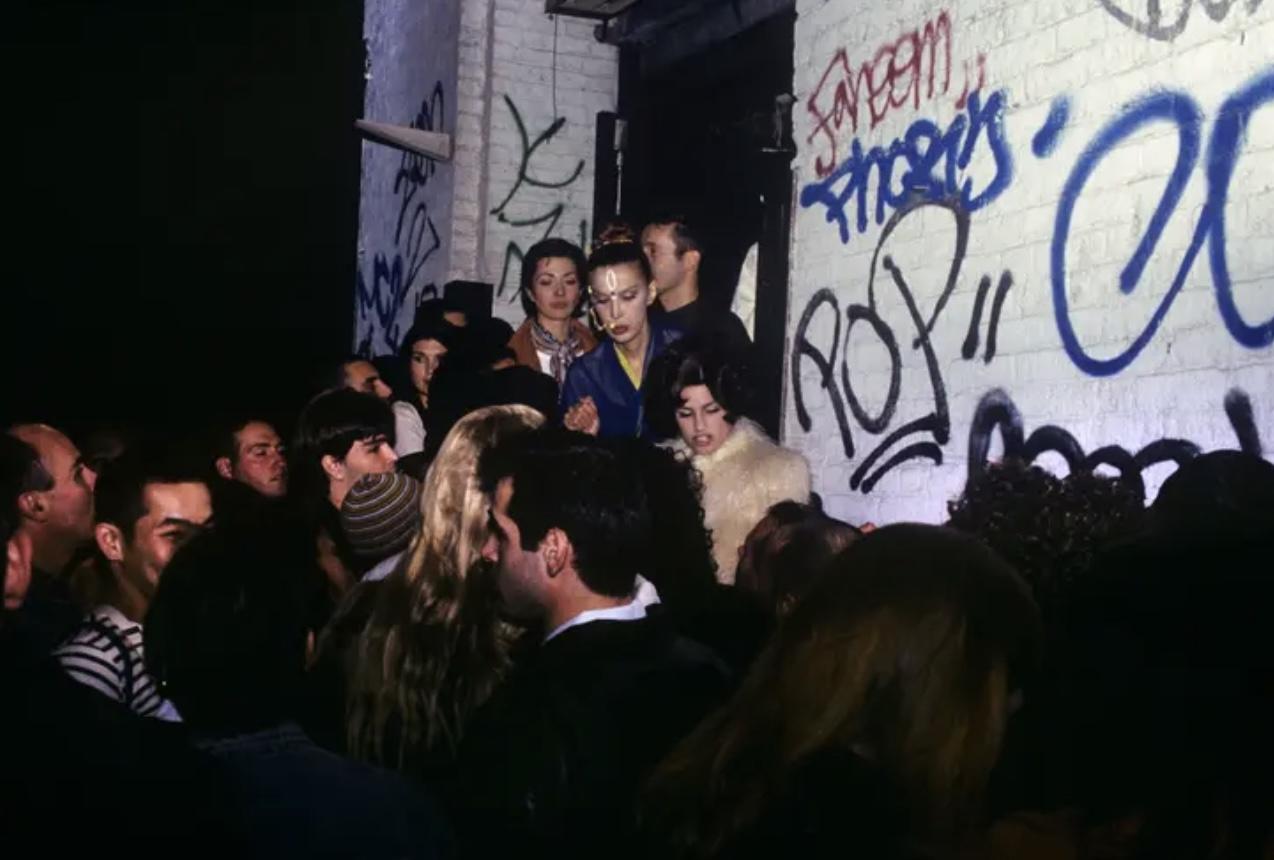
The door scene at the Tunnel. Photo by Steve Eichner.
The Tunnel was more than a mere nightclub. It was analog infrastructure for subculture. Downtown performance, fashion fantasy, techno and house music, gay nightlife, and A-list mythology all moved through the same massive space on different nights across the multitude of rooms Tunnel offered its guests. Joseph remembers an orbit large enough to contain figures like Prince and Leonardo DiCaprio, and nights when thousands of revelers moved to the same beat until morning. Once the room was working, race and gender and status mattered less than the music. The beat became the temporary law.
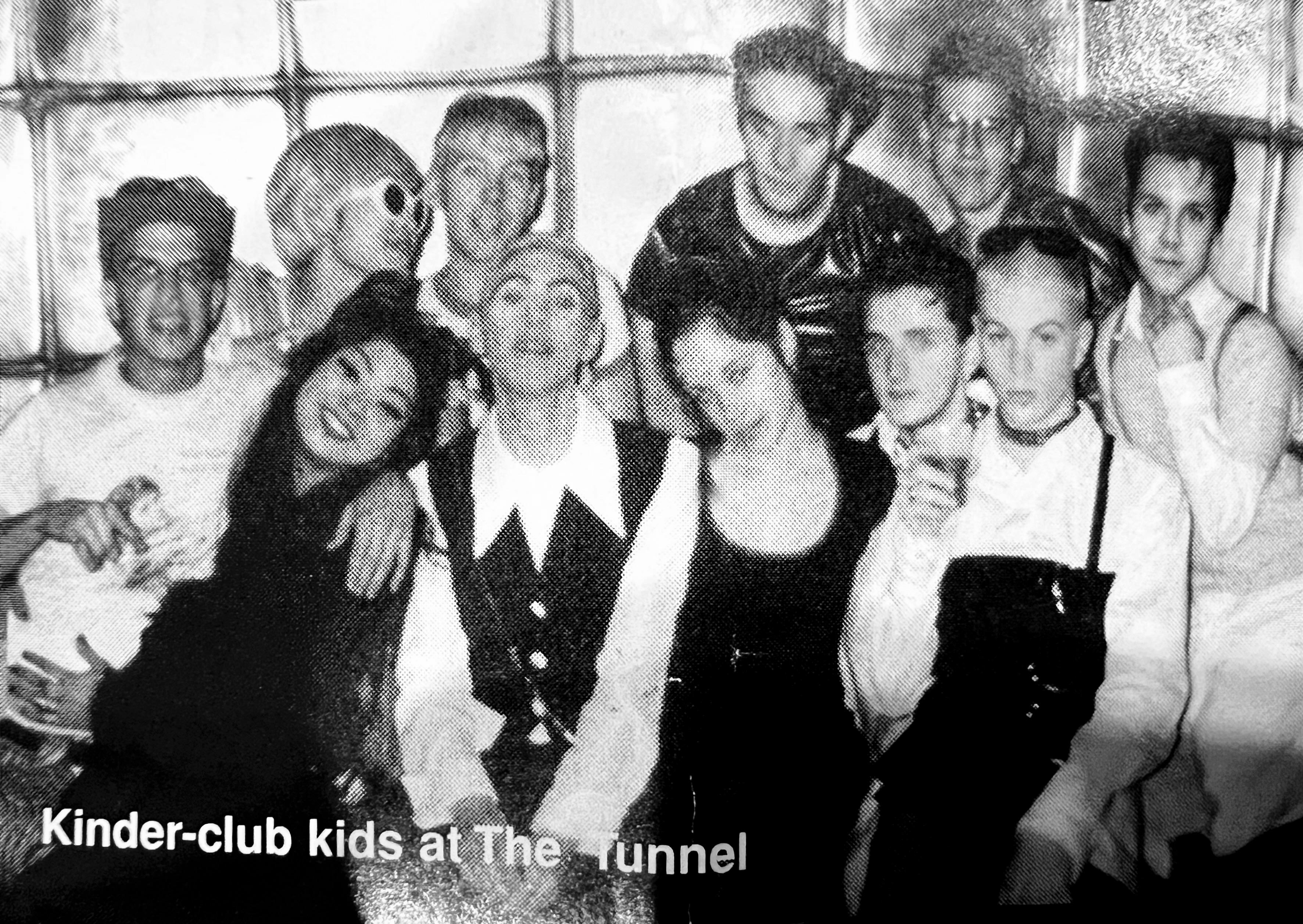
19 year old Joseph Quartana as promoter, host & doorperson at the Tunnel, pictured 2nd from right.
Joseph was nineteen, studying in New York, and already consumed by the art of producing a weekly rite on this scale, with this much power. Heroes of his — the kind of musicians who had propelled him toward the city in the first place — could now go out of their way to attend a night he helped shape. It was dizzying: to become part of the entertainment of the very people whose work had helped summon you there.
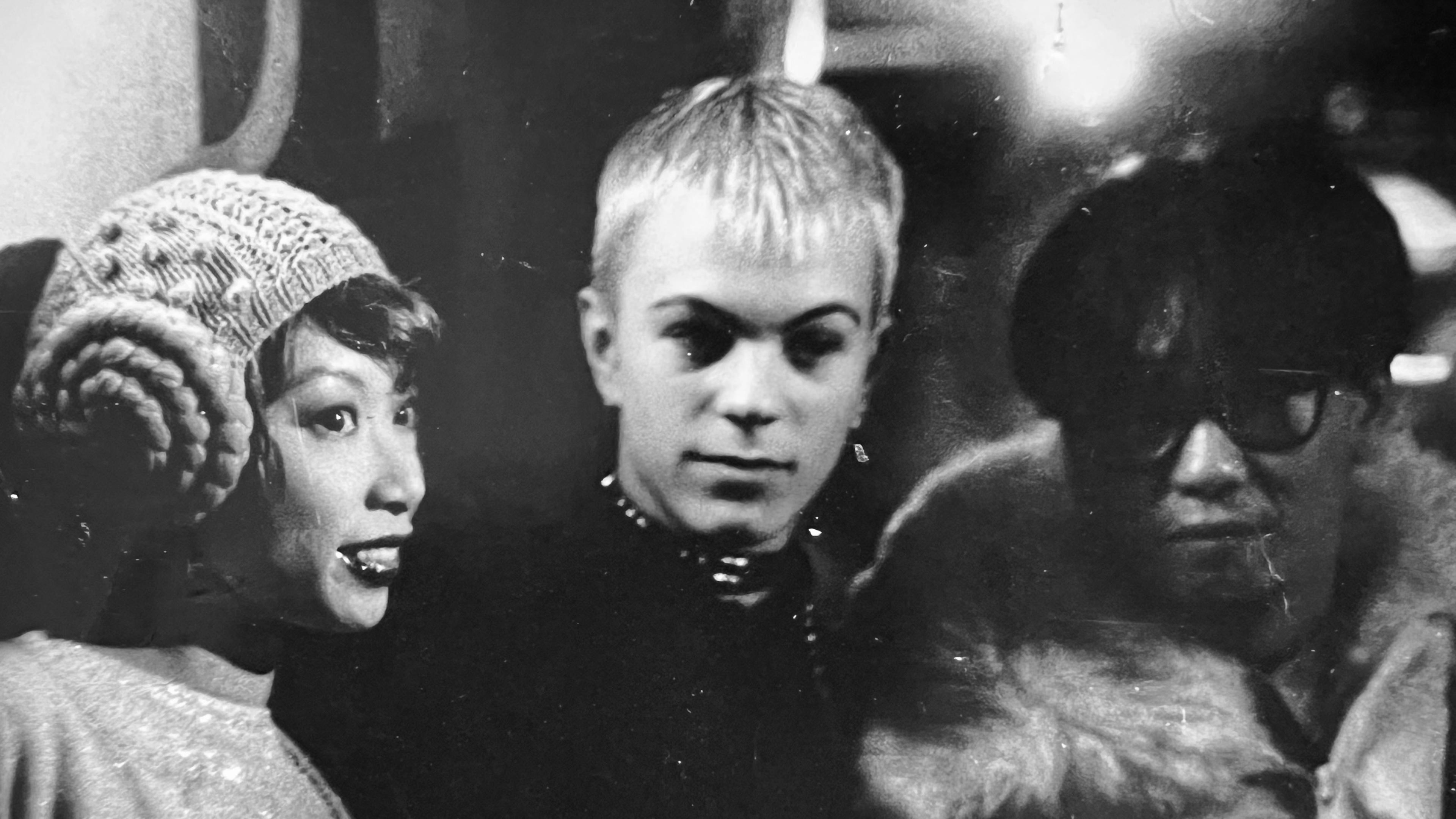
Joseph Quartana and Japanese pop group Pizzicato Five at the Tunnel.
The door was the first threshold to pass, and somehow he was given charge over it. The mission was clear: anyone who looked like a predator, homophobe, or a threat to the safespace was forbidden entry. This was not snobbery for its own sake, it was atmosphere protection. One bad actor could kill the vibration of the night. The roughness that shatters magic had to remain outside so the delicate Elysium inside could hold for twelve hours.
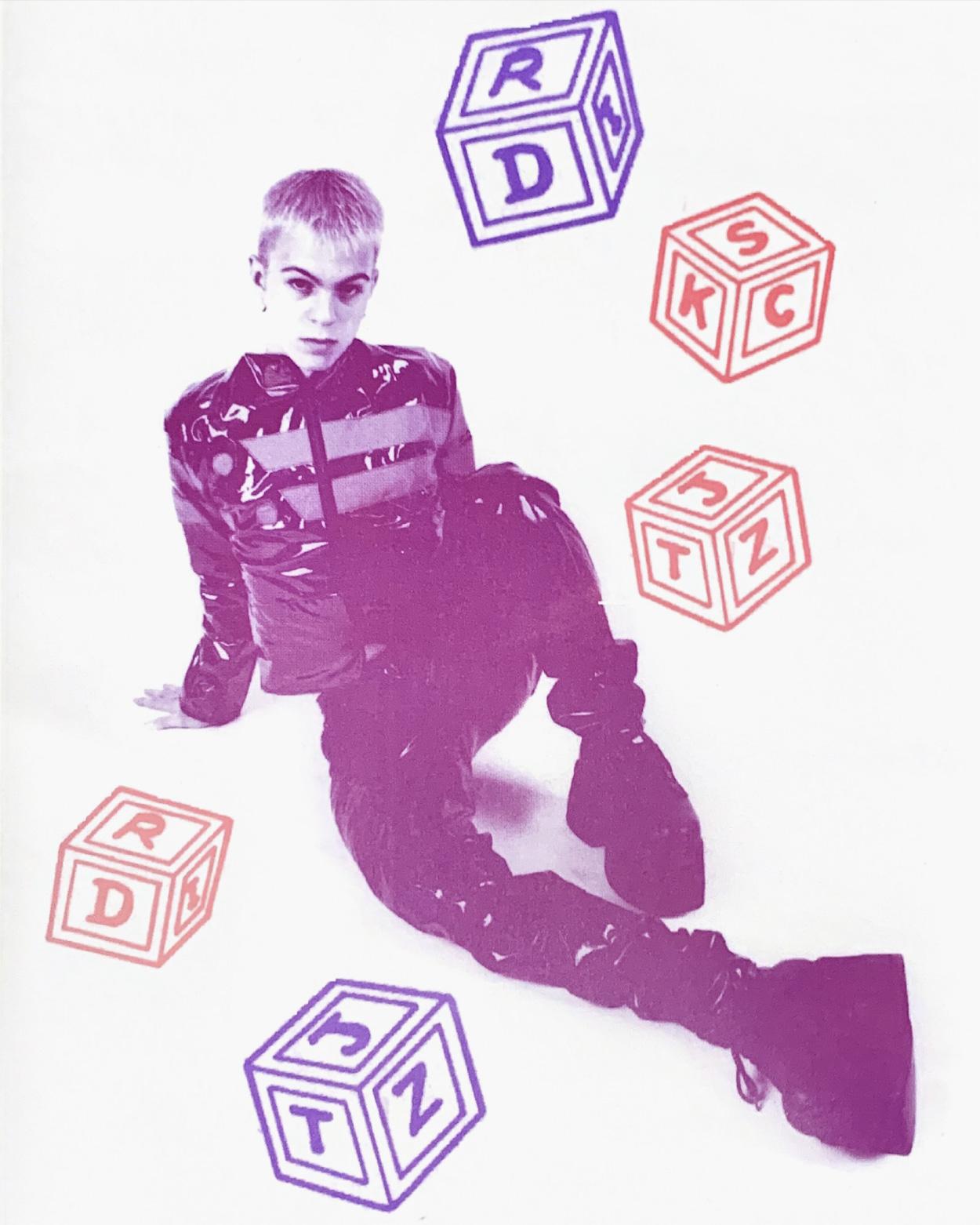
Joseph Quartana birthday flyer for the Limelight nightclub, 1995.
Throngs waited outside year-round. In winter on 12th Avenue at the edge of the frigid Hudson River, Joseph stood there freezing in costume instead of a sensible coat, dedicated to the ritual of keeping the unwanted out and the atmosphere intact. The line itself became a stage. Some people arrived as beauty. Some arrived as money. Some arrived as fame. Some arrived as danger pretending to be glamour. Some had made themselves for the night with such conviction that the room needed them. Joseph had seconds to read the difference.
Years later, when Joseph began building Ierofante extrait de parfum around the Hierophant and the mysteries of Eleusis, the pattern returned with force. The Tunnel had been his first Telesterion in the architecture of experience.
In ancient Greek lore, the Telesterion at Eleusis was the sacred hall of initiation. Candidates prepared for ritual, wore appropriate garments, moved through days of procession and ceremony, drank the sacred kykeon, and entered a space where hidden truths were shown and spoken by masters of ceremony called Hierophants. The rites involved darkness, repetition, song, theatrical allegory, revelation, and return. The initiate came back to ordinary life changed.
A discotheque became a temple because it produced transformation.
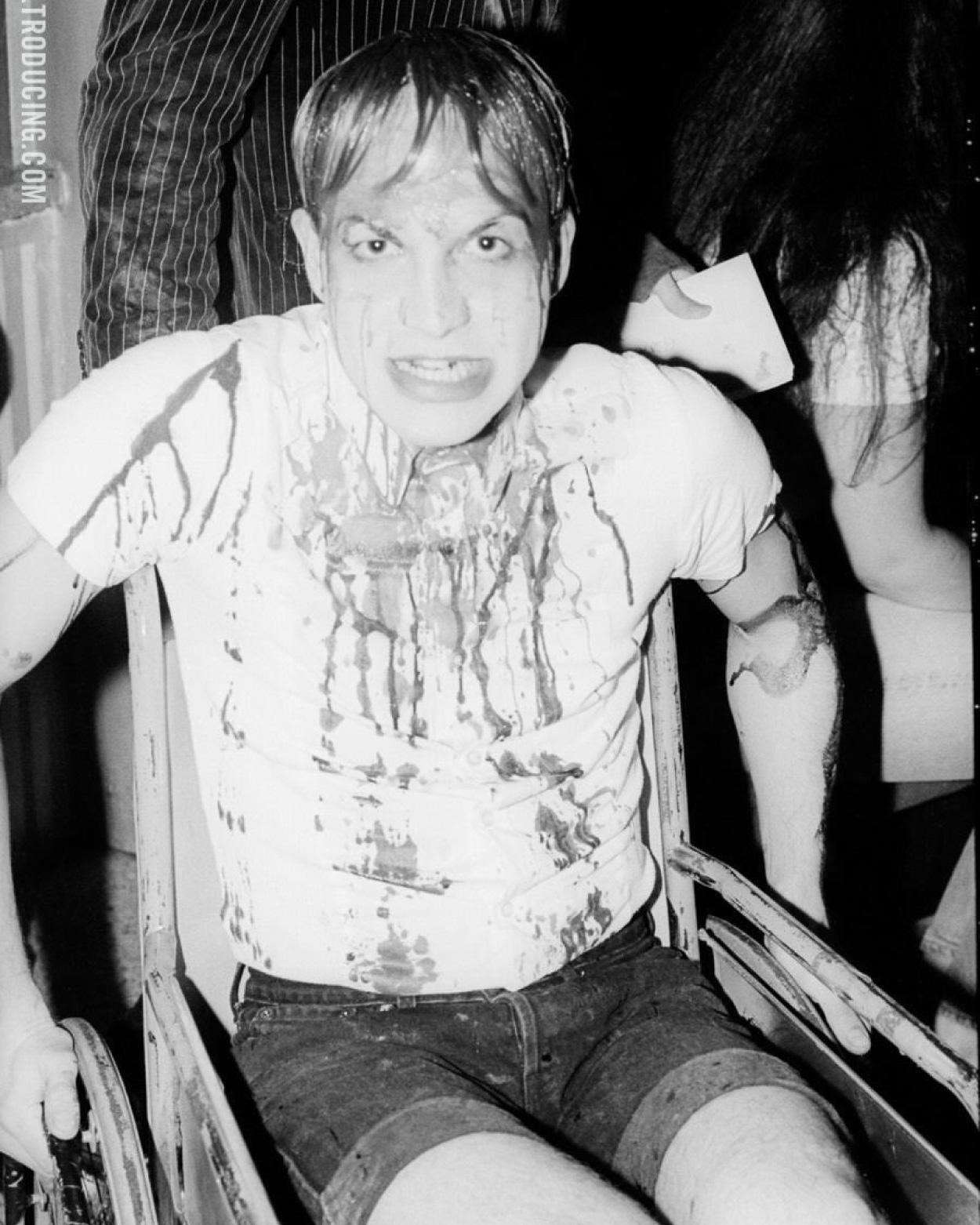
Notorious club kid murderer Michael Alig. Photo by Alex Freund.
Inside The Tunnel was a second threshold: the Silver Bedroom.
In 1994, Joseph inherited the room from Michael Alig, the late Club Kid promoter whose story became the basis of the film Party Monster and who was later portrayed by Macaulay Culkin. Alig had been one of the defining, disastrous figures of Peter Gatien’s nightlife orbit: a brilliant promoter with a talent for spectacle whose life collapsed into addiction, violence, and the killing of Andre “Angel” Melendez.
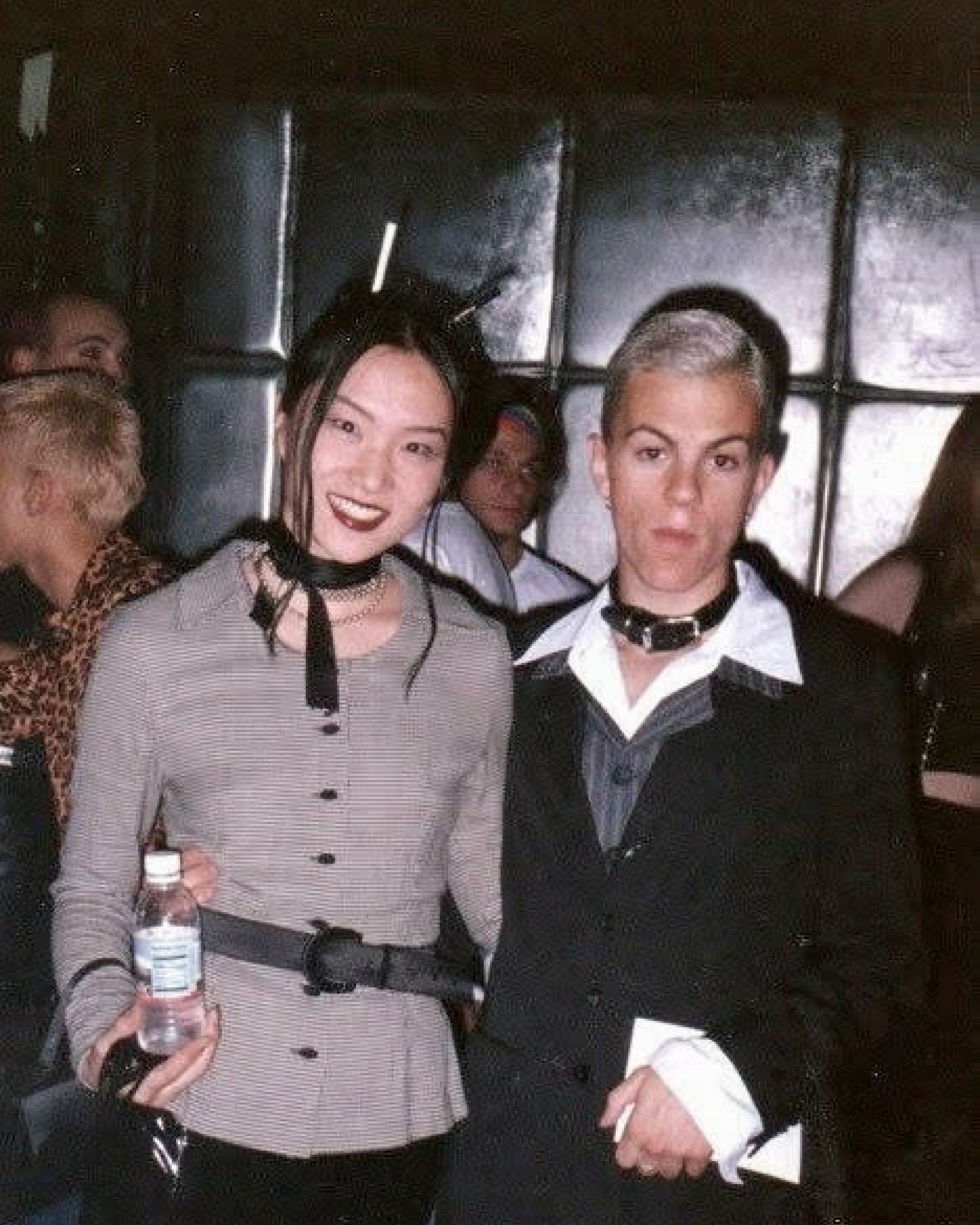
Sophie Na and Joseph Quartana in the Silver Bedroom at the Tunnel nightclub, 1994.
The Silver Bedroom carried that glamour and danger in its walls. It had a Warhol Factory homage already in place; Joseph’s task was to preserve the magic, refine the mix, and protect the charge.
This room had its own code and admitted only the exceptional. Joseph employed a transgender woman named Gravity for the threshold. Gravity created her own outfits from scratch, and her eye helped preserve the room’s extraordinary energy.
Ballroom culture gave that room much of its intelligence. In the queer ballrooms of Harlem, a house is more than a team; it is a chosen family and a training ground. A category is a performance brief, a test of whether someone can make an identity or fantasy convincing enough for the room to believe it. Reading and shading turn perception into verbal weaponry. Realness turns presentation into survival craft. In that world, a body could claim dignity by the way it met the light. A pose could turn exposure into sovereignty.
Grace Jones appeared one night and the room recognized royalty before anyone needed to speak. Alicia Silverstone passed through in the charged afterglow of Clueless. Dmitri from Deee-Lite belonged to the same orbit of club wit, rhythm, and costume. The room had become a field powerful enough to attract its own mythology.
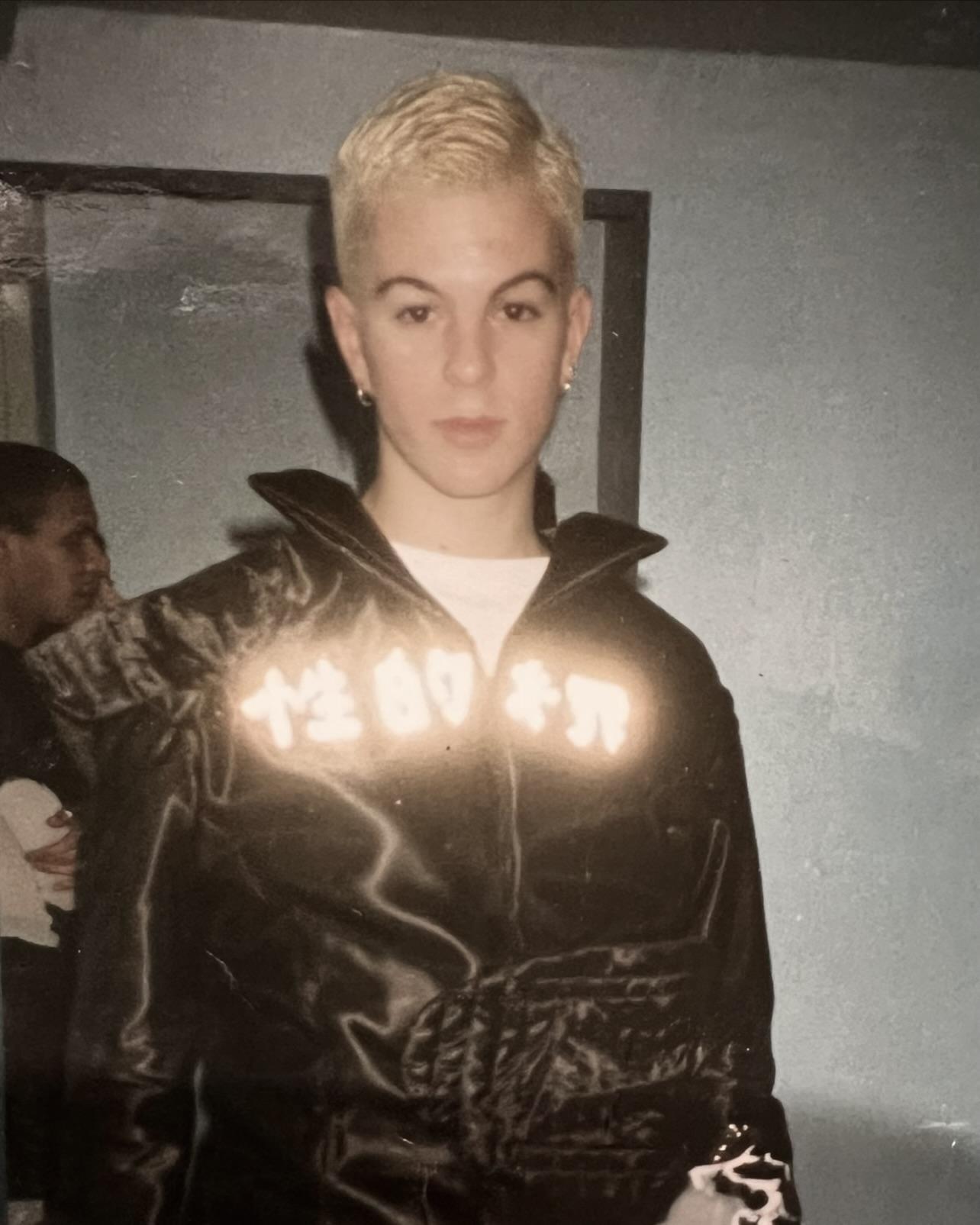
Joseph Quartana in the Tunnel's unisex bathroom lounge/bar.
The music was golden-era house, spun by Junior Vasquez, the Madonna-associated producer, remixer, DJ, and sovereign of New York gay nightlife. House carried disco’s body memory into a harder urban pulse for New York gay royalty and their friends. This was the Studio 54 of the 1990s, only the decadence was more psychedelic, more democratic, and more fun than the uptown tuxedo culture of its 1970s counterpart.
The DJs engineered voltage. Bodies answered. Thousands would dance to the same beat for hours on end, into the late mornings.
Joseph noticed early that matter could be changed by attention. Objects could be talismanized: charged until they seemed to carry force beyond their physical material. A thing could be sanctified when enough intention, pressure, and emotion were embedded into it.
Mark Rothko made that truth visible in painting. His large fields of color were built through repetition, brushstroke over brushstroke, color pressed into color until pigment began to hold emotion like a charged field. The canvas became more than a surface because attention had concentrated inside it. In similar fashion, a crucifix can be blessed. A room can also be blessed. A song can be played until the crowd becomes a singular body. A gifted fashion designer can talismanize a garment, which then changes the person who wears it. Joseph saw this directly as a fashion buyer: the right piece could transform a client’s carriage, courage, and sense of self.
Creative force, for Joseph, can be used for literal reproduction or sublimated into an endeavor like art. It comes from the same source and is composed of the same stuff. When that energy burns brightest, the artist cuts deeper.
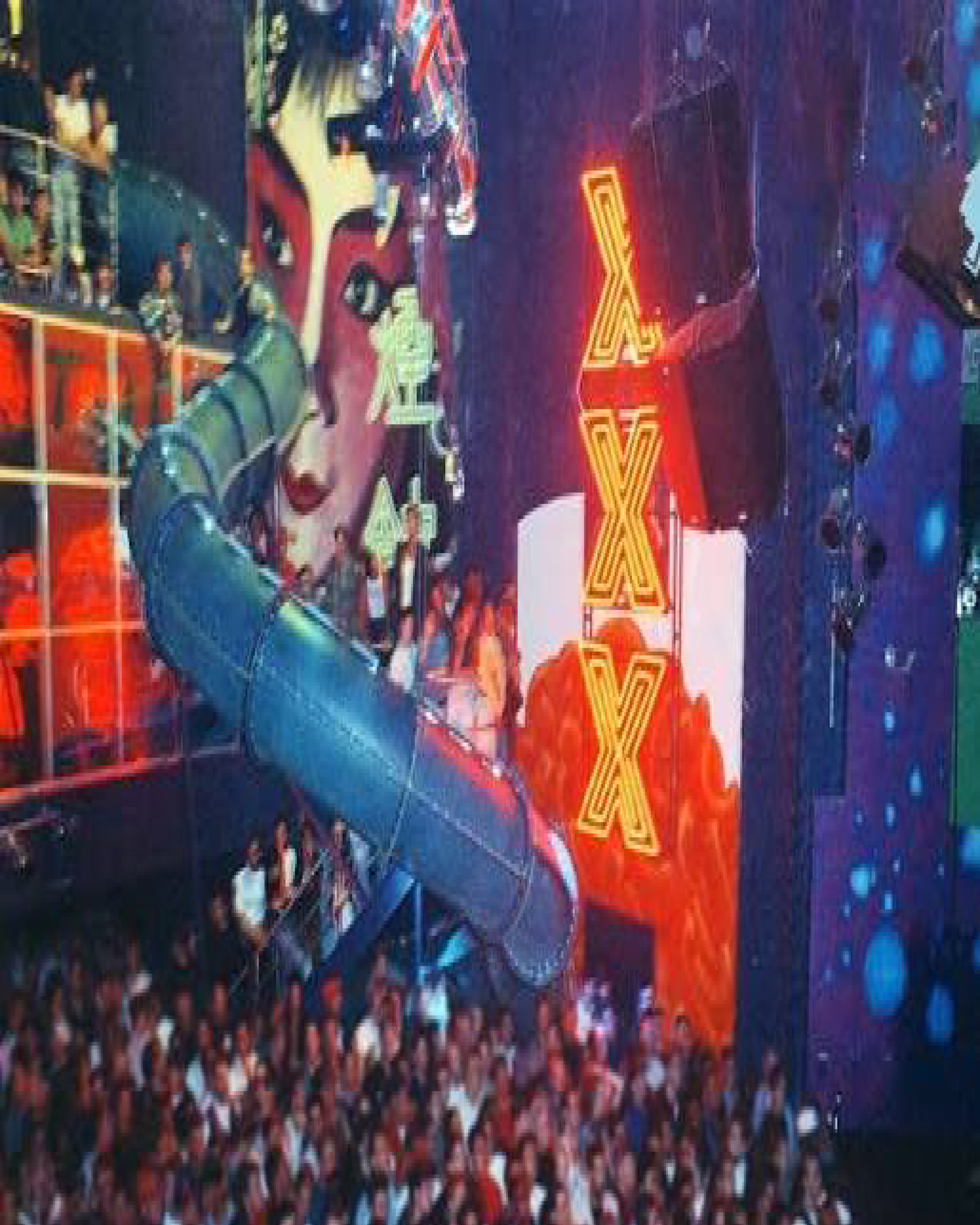
Club USA's main dance floor with slide. Photo by Steve Eichner.
Before The Tunnel, Joseph’s first job for nightlife impresario Peter Gatien was hosting in the Thierry Mugler Room at Club USA, another Gatien superclub, this one in Times Square. It was a neon funhouse where celebrity, sex, slides, VIP rooms, and theatrical excess became part of the programming. The Thierry Mugler Room was literal architecture of fashion fantasy. Mugler was a god among men in that world: the designer of chrome bodies, celestial machinery, future-women, and glamour so sculptural it seemed built.
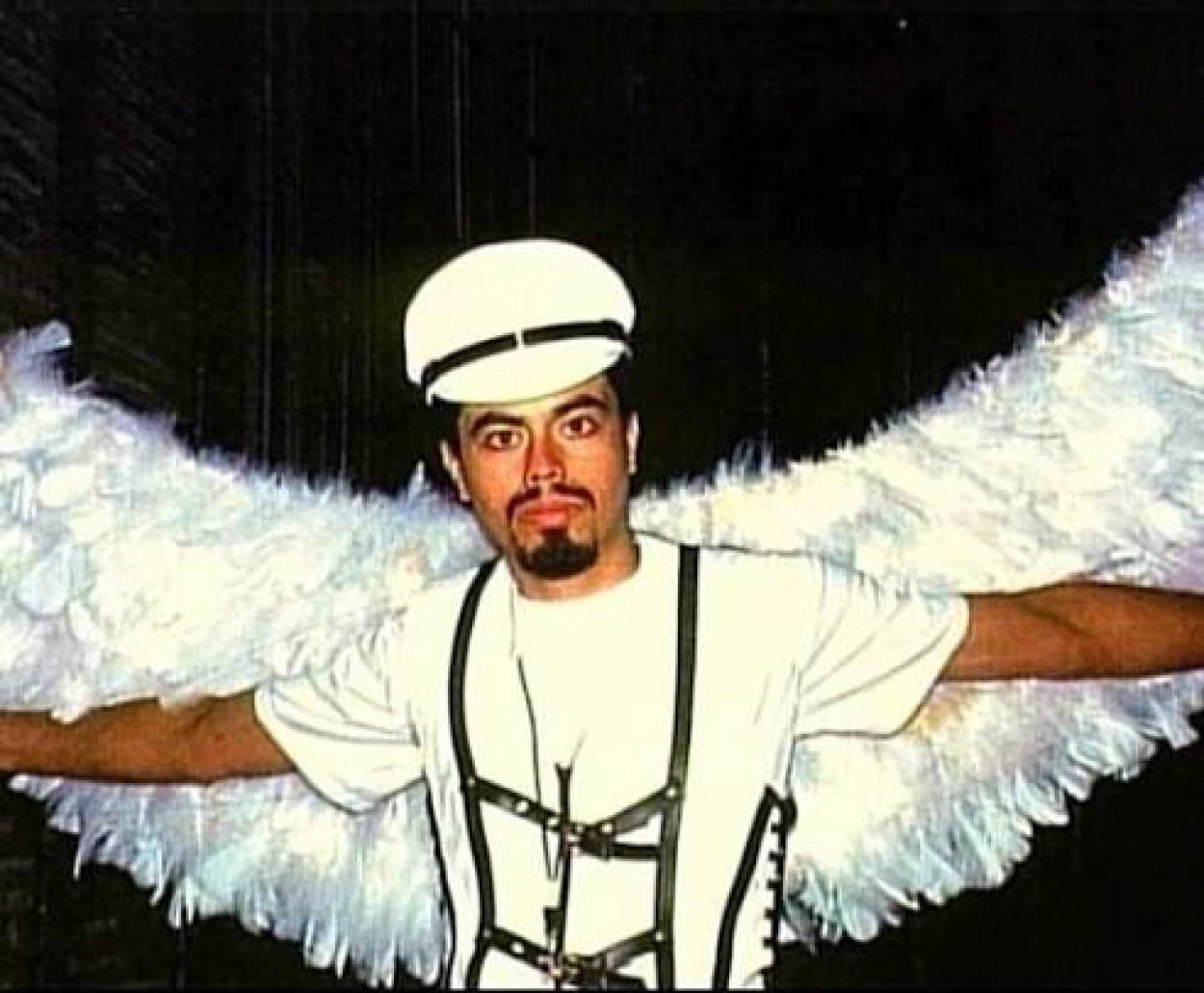
Andre "Angel" Melendez
That room was also where Joseph remembers Andre “Angel” Melendez serving him his first cup of MDMA punch. The memory is charged by hindsight, because Angel would later be murdered by Michael Alig. In the moment, it was initiation: a young host inside a Mugler-designed room, working for Gatien, tasting the chemistry of nightlife, and learning that a room could be a complete world.
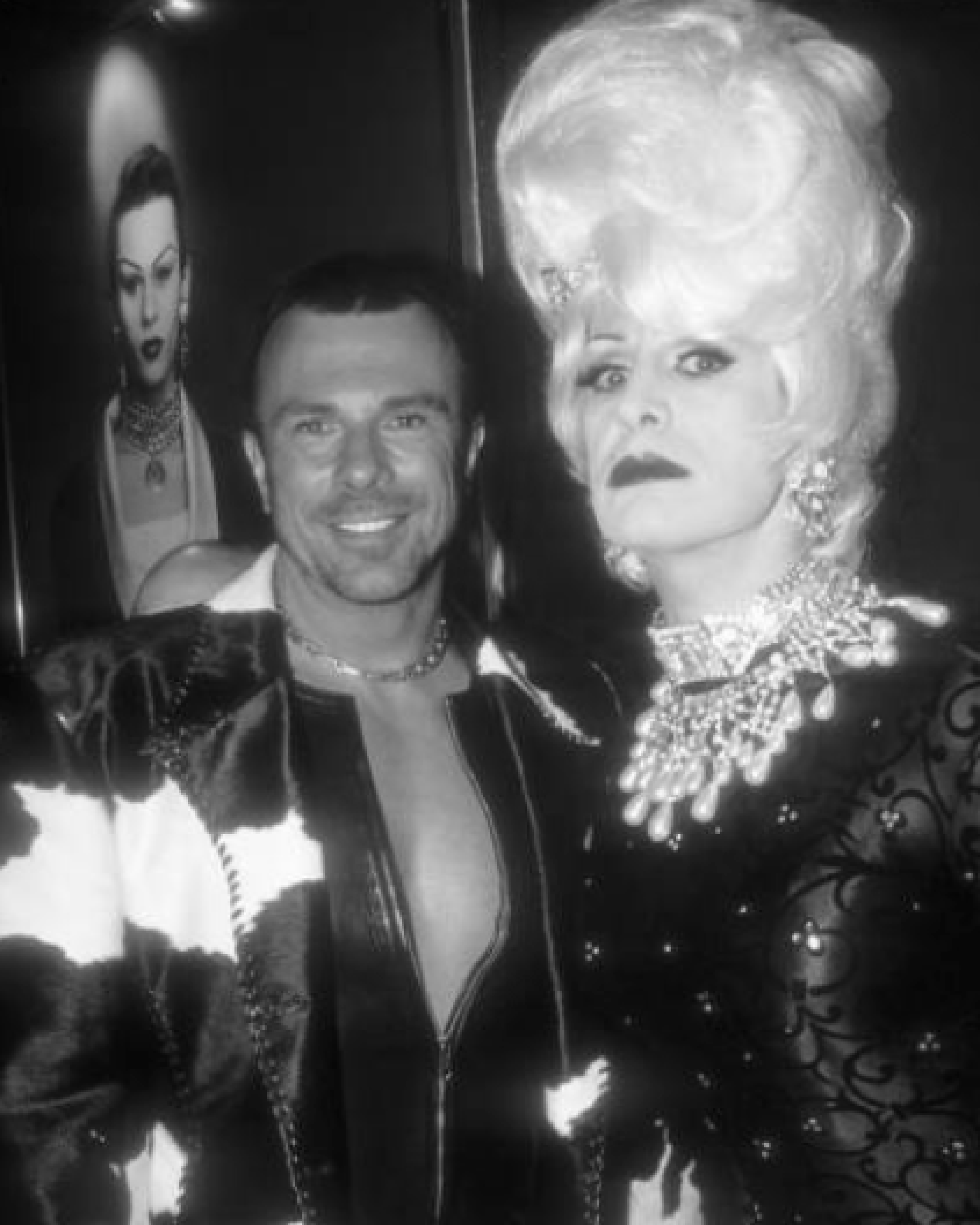
Thierry Mugler pictured left in the Thierry Mugler room of Club USA, 1993. Photo by Steve Eichner.
Mugler’s perfume Angel arrived inside that same atmosphere. Launched in 1992, Angel helped change modern fragrance because it made edible sweetness feel like prestige, power, and nightlife rather than dessert. Cotton-candy brightness and dark patchouli made the perfume both delicious and dangerous. It helped define the modern gourmand family. It was loud, diffusive, instantly recognizable, and built for arrival.
To an impressionable young man, Angel smelled like that world looked: Metallic heat. Outrageous costumes. Queen energy. Vibrant club kids. Fashion students testing new selves in public. Then novel Techno and house music pressing bodies into one pulse. People dressed as if the future had sent them backward into the present.
Practically, Angel revealed scent as a tool for remote seduction. Fashion changed how the body was seen. Music changed how the body moved. But scent changed the actual room. Perfume could be aura. Projection. Spell. Threshold.
As a small child in late 1970s New Jersey, Joseph heard disco at home through his father’s records. Donna Summer’s I Feel Love gave him something closer to a vision than a song. "I remember hallucinating when I'd hear that", recalls Joseph. Giorgio Moroder’s pulse made repetition feel like light. The future entered the room as machine rhythm and desire.
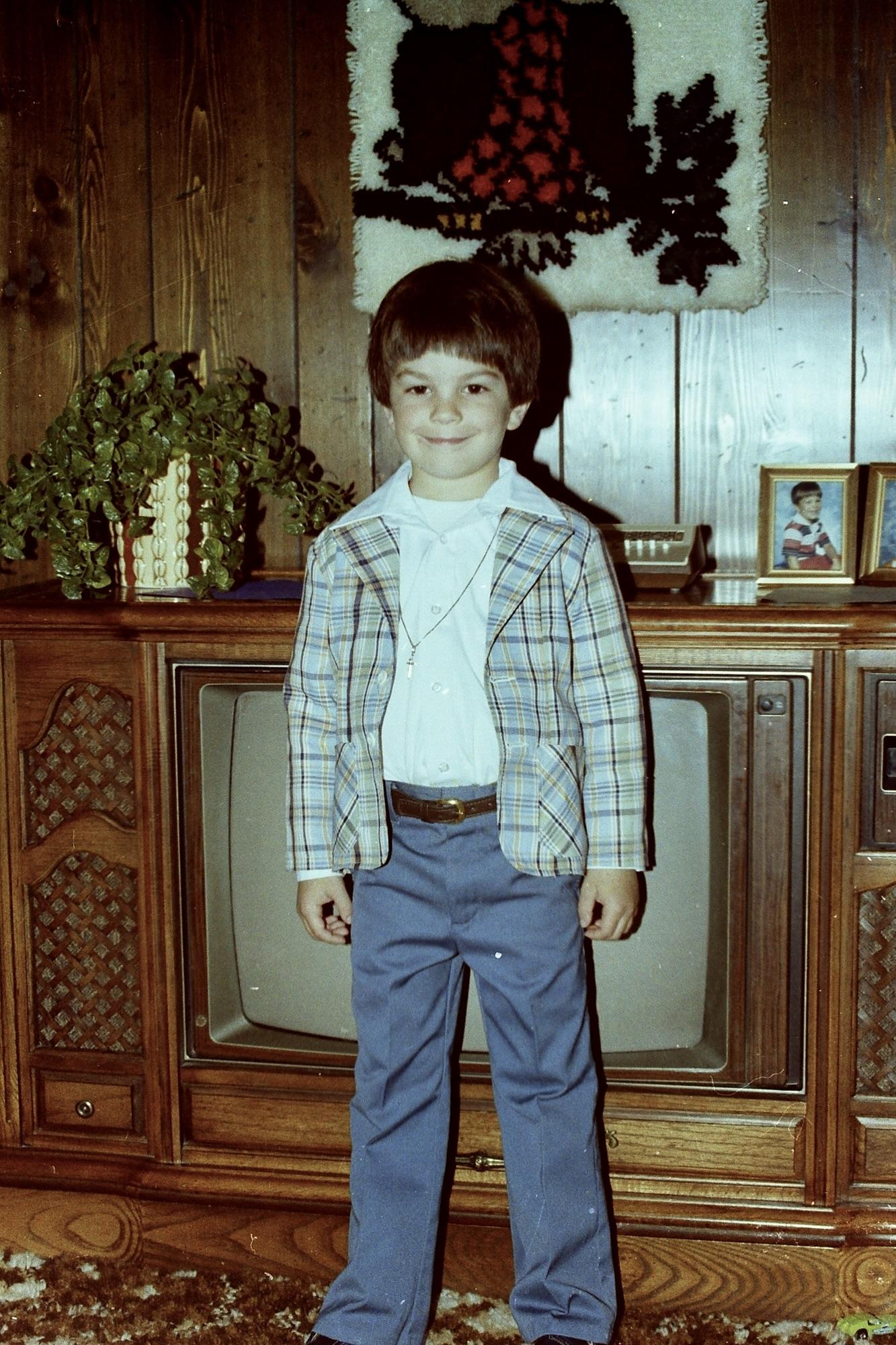
5 year old Joseph Quartana at his childhood home in NJ.
In the early 1980s, the enchantment shifted. Yaz’s Situation came through the radio with a MUTE Records charge Joseph would understand more fully years later. MUTE was the British label behind Depeche Mode, Yaz, and a particular kind of electronic severity: pop built from machines, melancholy, sex, and discipline. Joseph froze upon hearing it the first time. Alison Moyet’s voice and Vince Clarke’s electronics sounded exuberant, strange, British, funny to an eight-year-old ear, but completely hypnotic. Duran Duran’s Hungry Like the Wolf video arrived through MTV as cinematic appetite. The NeverEnding Story's pulsating score opened another door to Moroder’s phantasmagorical world. Electronic pop became atmosphere: image, fantasy, synthetic longing, and emotional color moving together.
Then house music detonated the lesson. It took the breakdown — the point in disco where the song seemed to unlock the body — and extended that release into joyful track architecture. Only a pre-teen, Joseph could already hear what the producers were offering. Marshall Jefferson made house feel devotional. Adonis stripped desire into machine skeleton. David Joseph carried post-disco brightness forward. Little Louie Vega made the New York swing feel precise and endless. Joseph understood the proposition before he could fully explain it: the song could hold the body in suspended release; it could carry tension.
Before NYU, he was already building rooms. Around 1990 and 1991, he organized local raves for high school friends and like-minded kids from neighboring towns, often in the finished basements of wealthy classmates whose parents were elsewhere. New wave and techno made suburban rooms briefly phantasmagoric. The pattern had begun: choose the sound, gather the bodies, alter ordinary life.
After the club years and post college graduation came nine months of financial analytics drudgery on Wall Street, where Joseph nearly lost his spirit inside the deadening air of brokerage firms. The dreams turned dark. The atmosphere was wrong. He invested some of his parents’ savings well enough to generate trust and seed capital, then used some of that capital to build the world he believed needed making.

Joseph Quartana spins an all vinyl set at Paris' La Boule Noir in 2001.
As with DJ'ing, curating a fashion boutique was a form of storytelling using other people’s work to nurture a specific atmosphere of self-empowerment.
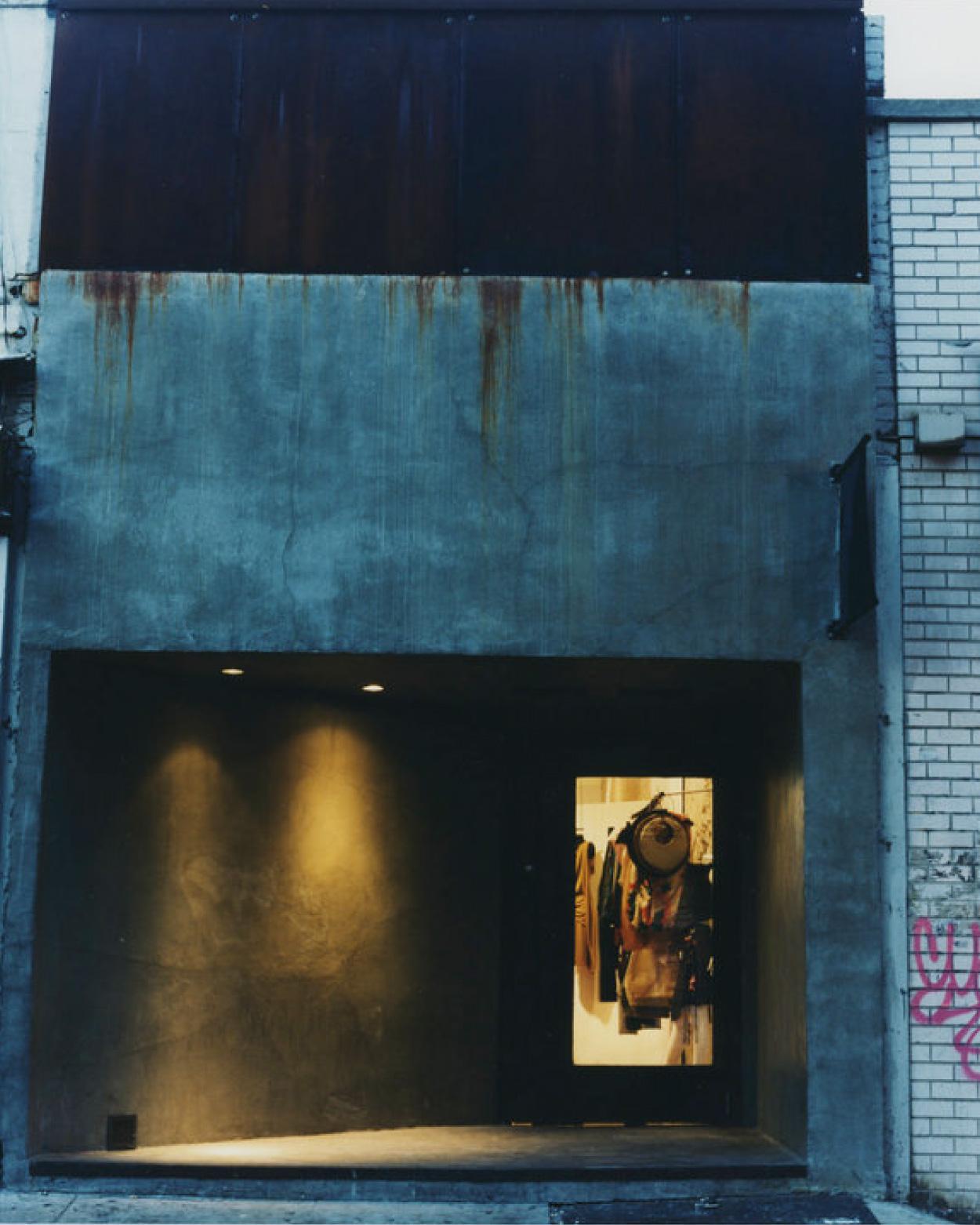
The original Seven New York at 180 Orchard Street.
Seven New York opened on April 1, 2000. April Fool’s Day was part of the wink, and more than a joke, it was an inadvertent reference to The Fool in tarot: the figure at the beginning of the journey, stepping forward into the unknown with danger beneath him and possibility ahead, and the perfect metaphor for Joseph's newest undertaking, a temple to transformative fashion to fill the void left behind by the recently closed Charivari boutique in Midtown, as, who else was going to curate ball garments for the scene? Joseph decided he would step in.

The interior of Seven New York's 180 Orchard Street location.
The fashion industry had offered Joseph no door, so he built one. "I specifically remember getting rejected from a Neiman Marcus interviewer who went so far as to tell me pointblank that I didn't fit into the fashion industry, and I was like, oh really?" I really took that sleight as a challenge, it really put my passion into urgent overdrive.
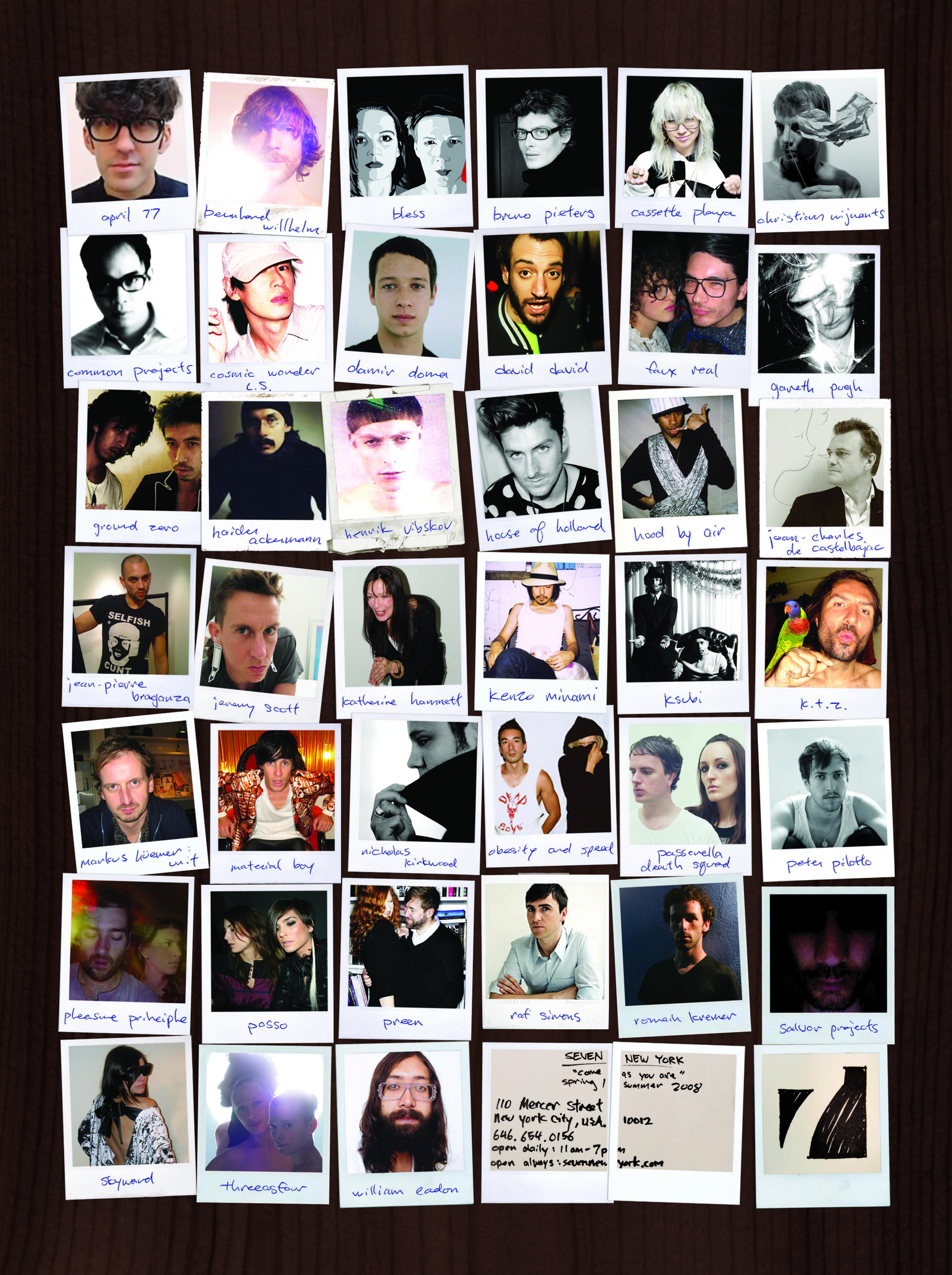
Seven New York's designer roster included fashion designers Raf Simons, Threeasfour, Jeremy Scott, and Haider Ackermann among others. Poster from 2008.
Seven New York was a concept boutique, which means the store was not merely a place to buy clothing. It was an argument about what fashion could do to the body and to culture. Joseph named the store: "Seven as a number is the perfect gesture, a simple, deliberate stroke symbolizing dominance of the material plane" and designed the logo as an abstract inverted punchout of the number over a black square. He even designed the invite for the opening party with ADULT. flown in from Detroit to perform their premiere New York show, a black, unsolvable Rubik's cube. Every major cultural decision ran through him, from the clothes on the rack to the staff in the room, the parties organized around the store, and the public spell it cast. Partners helped with investment, graphics, and infrastructure, but the thesis came from Joseph: New York needed a place for clothing that changed the wearer from the inside out.
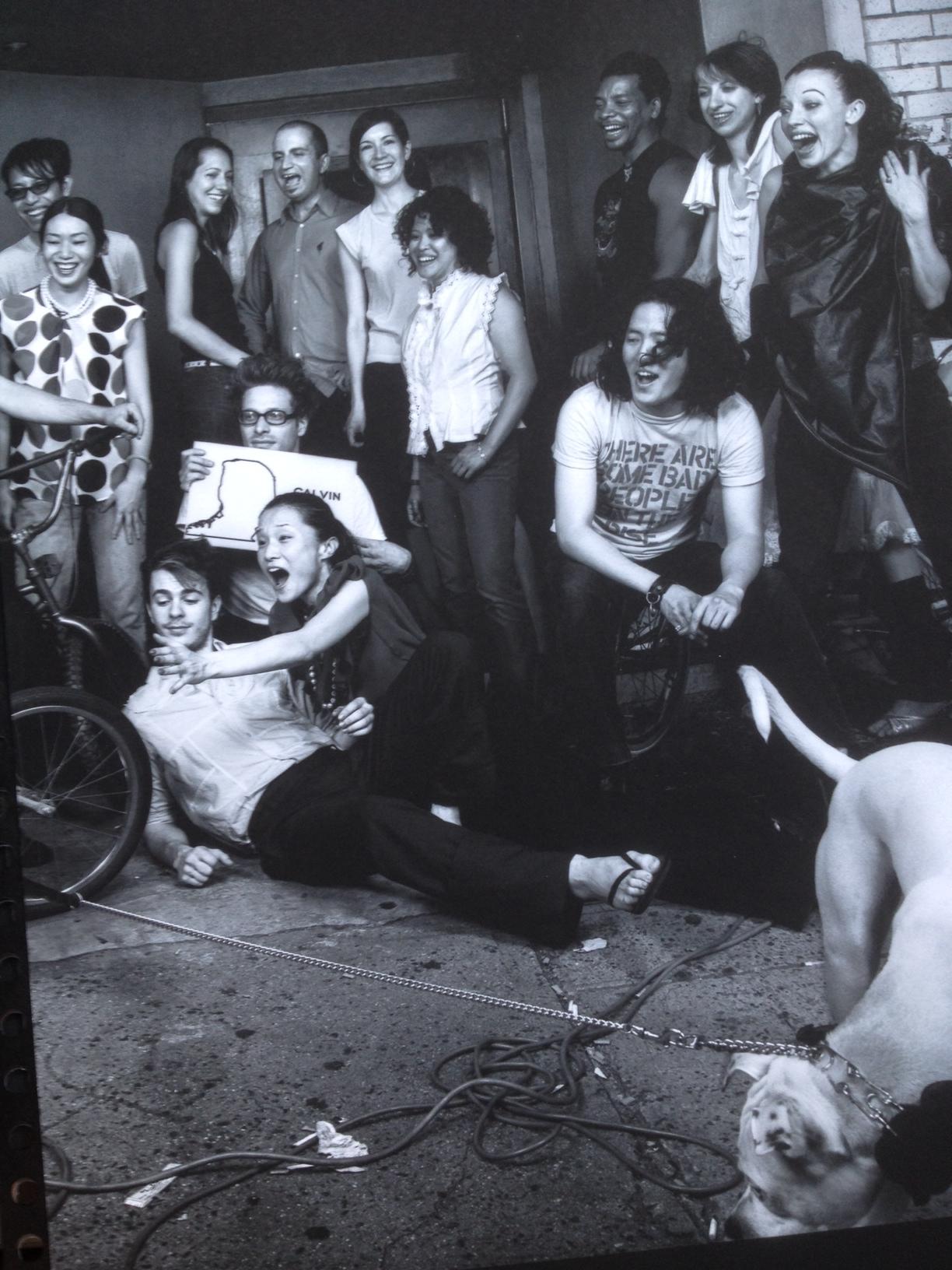
Seven New York feature in V Magazine, 2002. Pictured clockwise from top left, United Bamboo, Tess Giberson, Morteza Saifi, Bruce, DUGG, Zia Ziprin, Benjamin Cho (RIP), Sophie Na, and Joseph Quartana.
Seven was built around fashion as force. Joseph bought from conviction. The commercial instinct was present, sharpened by finance and retail discipline, but it served the charge. The racks formed an argument: fashion as wearable art, armor, signal, transformation — a world a person could step into and become sharper.
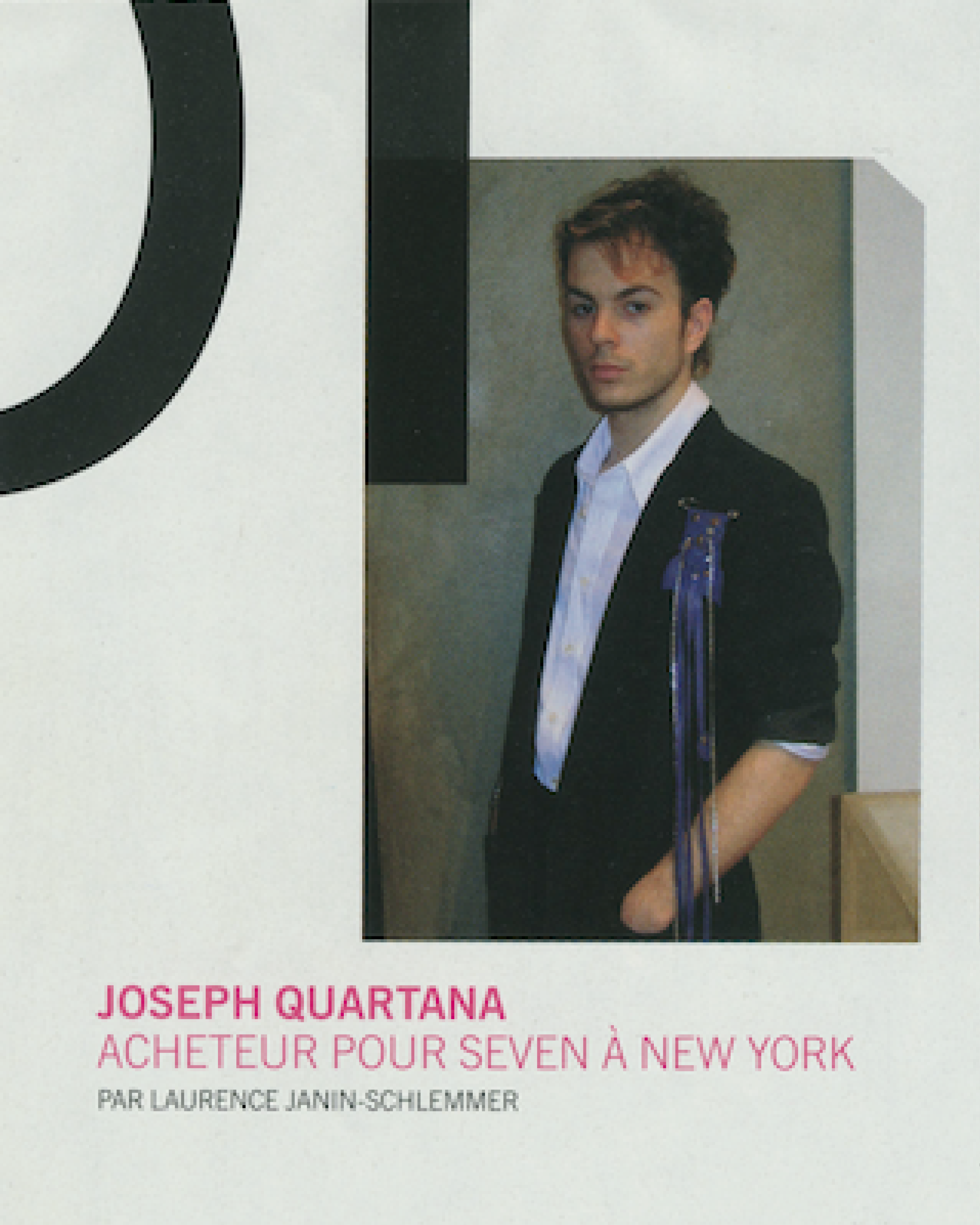
Joseph Quartana featured in Depeche Mode magazine, 2002.
The designers Seven championed now sit comfortably inside fashion history. At the time, their work required risk, trust, and the nerve to buy before consensus arrived. Raf Simons brought severity that felt intellectual and erotic at once. Anthony Vaccarello would become the force at Saint Laurent. Kim Jones would help define the modern luxury menswear system. Haider Ackermann’s fluid severity would later belong to the Tom Ford era.
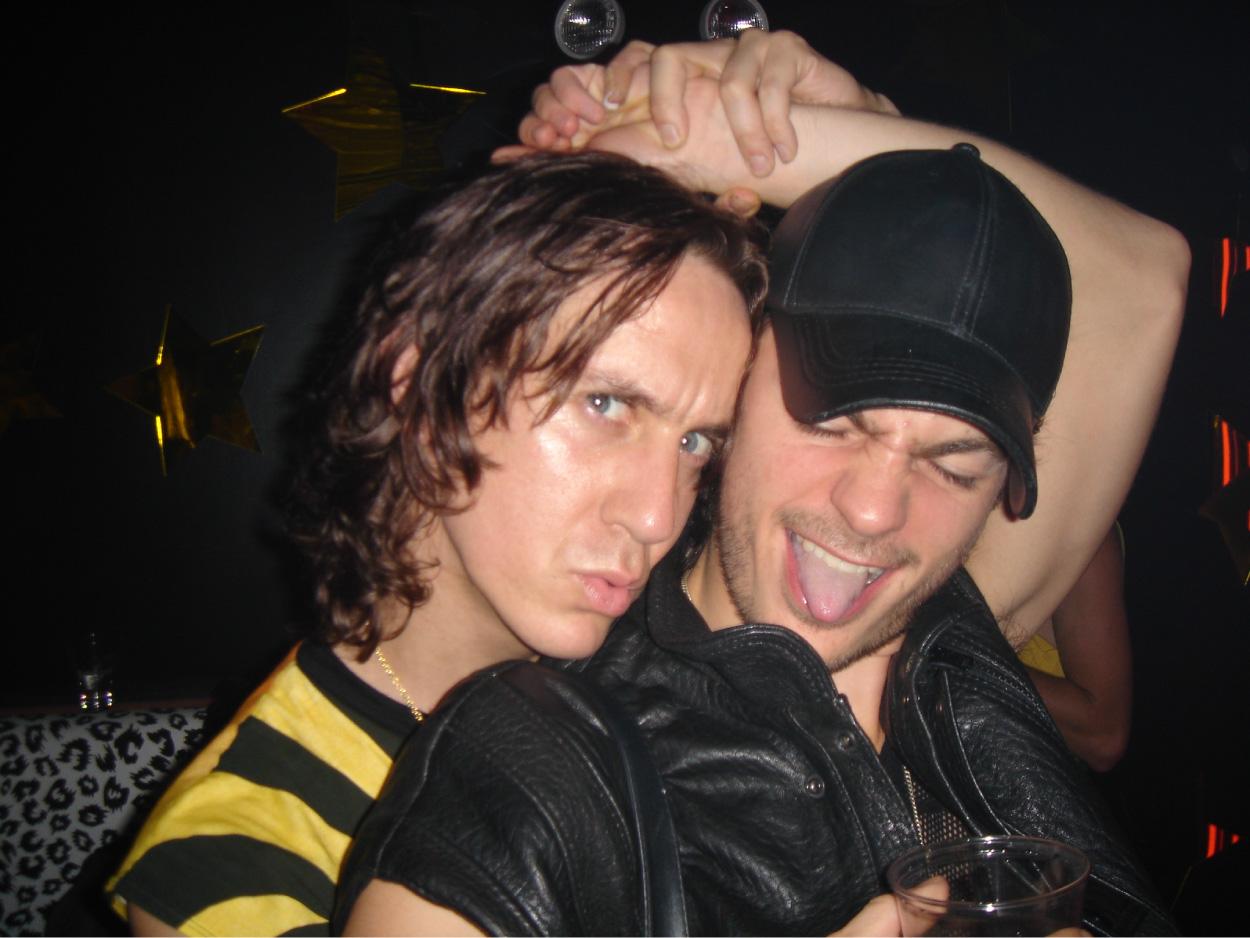
Jeremy Scott and Joseph Quartana having a twirl on the dancefloor, 2005.
Jeremy Scott turned pop into prank and weapon before Moschino made him a global name. Bernhard Willhelm made distortion joyful, dangerous, and unmistakably alive. Gareth Pugh carried darkness into architecture. Around them came the wider field Seven helped make legible: Mary Katrantzou’s print intelligence, Henrik Vibskov’s Danish surrealism, Hood by Air’s New York force, and many others whose work required ultimate conviction were found at Seven before anywhere else.
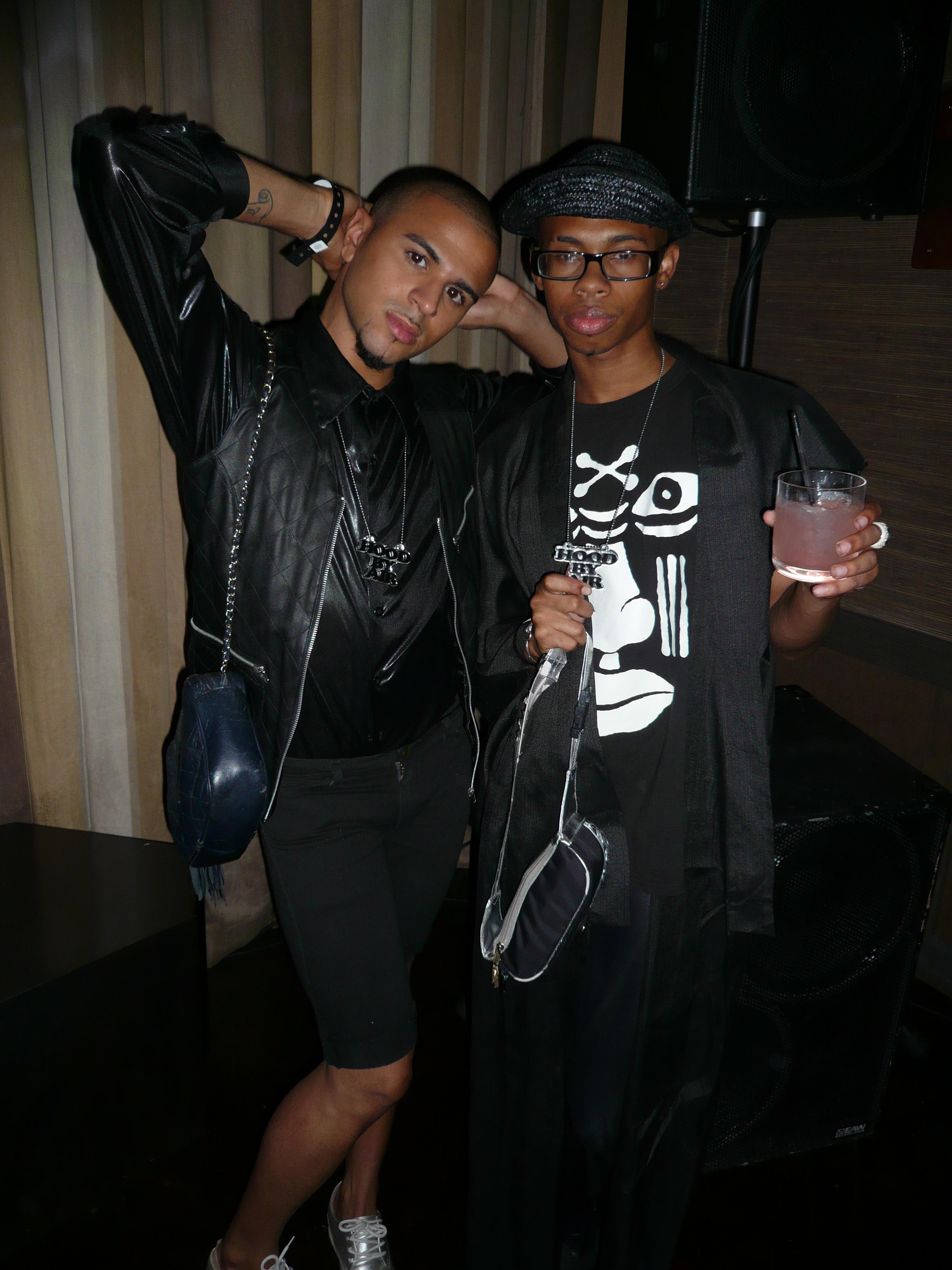
Fashion designers Luar and Shayne Oliver of Hood by Air at a Seven New York event after getting added to the roster, 2006.
Seven helped break careers before those designers became industry facts. It was Joseph’s first sustained witness to perfection in craft: designers experiencing entelechy, the moment when potential becomes form.
Joseph first encountered the word Entelechy through the dream houses of architect John C. Portman: Entelechy I and Entelechy II. Portman used the word for houses that tried to make potential actual in space. To Joseph, those houses felt like renderings of how to get to heaven — cathedrals of modern living with cosmic coordinates baked into the aesthetics. That idea would matter later. A perfume, too, could be built as a set of coordinates: material, atmosphere, ritual, and ascent encoded into form.
Henrik Vibskov shows the continuity. Seven helped launch his fashion in America. SixScents later created his first perfumes. Years afterward, Vibskov’s own stores would carry PARFUMS QUARTANA. Joseph’s worlds often move this way: fashion becomes scent, scent returns to fashion, and the relationship keeps its charge across decades.
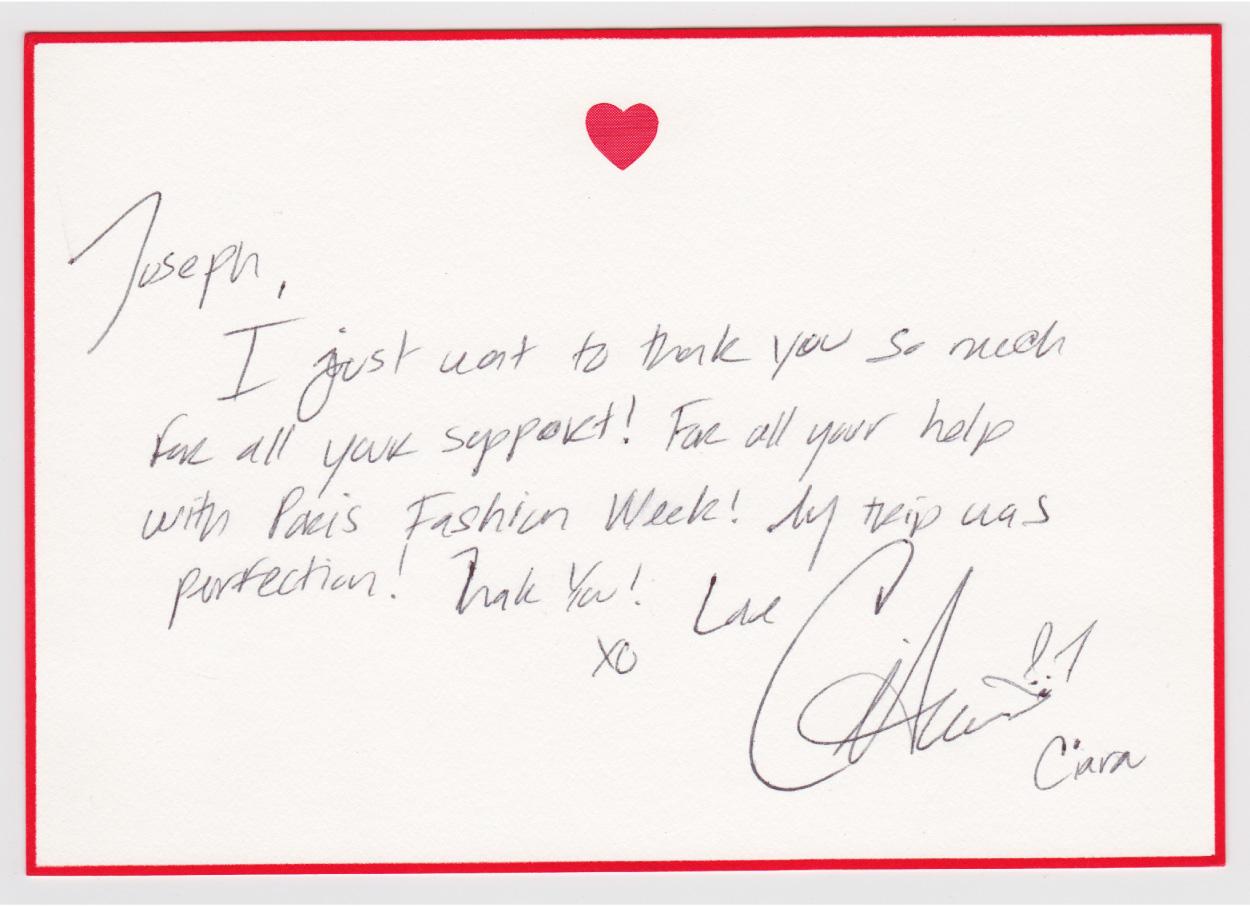
A handwritten thank you note to Joseph Quartana from pop star Ciara.
Seven also made the future operational. Its e-commerce platform began in 2001, early enough to place the store at the front of high-fashion online retail. At its height, Seven reached roughly one million dollars in annual turnover and drew a clientele whose choices shaped culture. Björk came repeatedly and shopped with seriousness. Céline Dion came in person. The Olsen twins made the pilgrimage, as did Pharrell of N.E.R.D. long before his Louis Vuitton directorship stint. JLo, who Joseph's wife worked for, became a convert as well as major figures from music and performance who trekked to the store because Seven had become a source beyond retail.
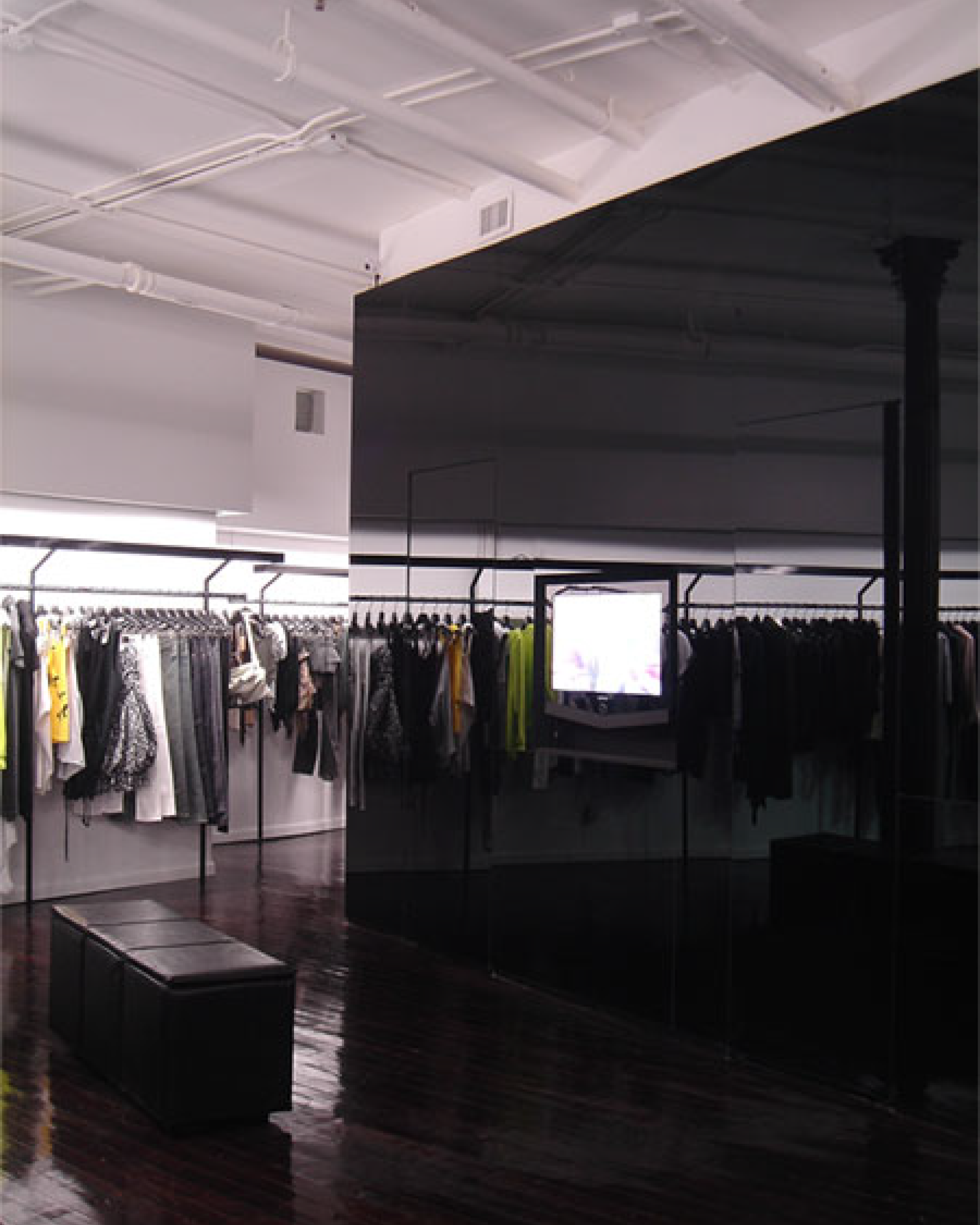
The black mirrored monolith of the second Seven New York at 110 Mercer Street.
The second Mercer Street space sharpened the mythology. It stood as a black mirrored monolith inside a white-walled Soho gallery context: half spaceship altar, by design. 2001: A Space Odyssey lived in the architecture — the large black mystery object, the charged surface, the pilgrimage point for those who sensed something beyond commerce.
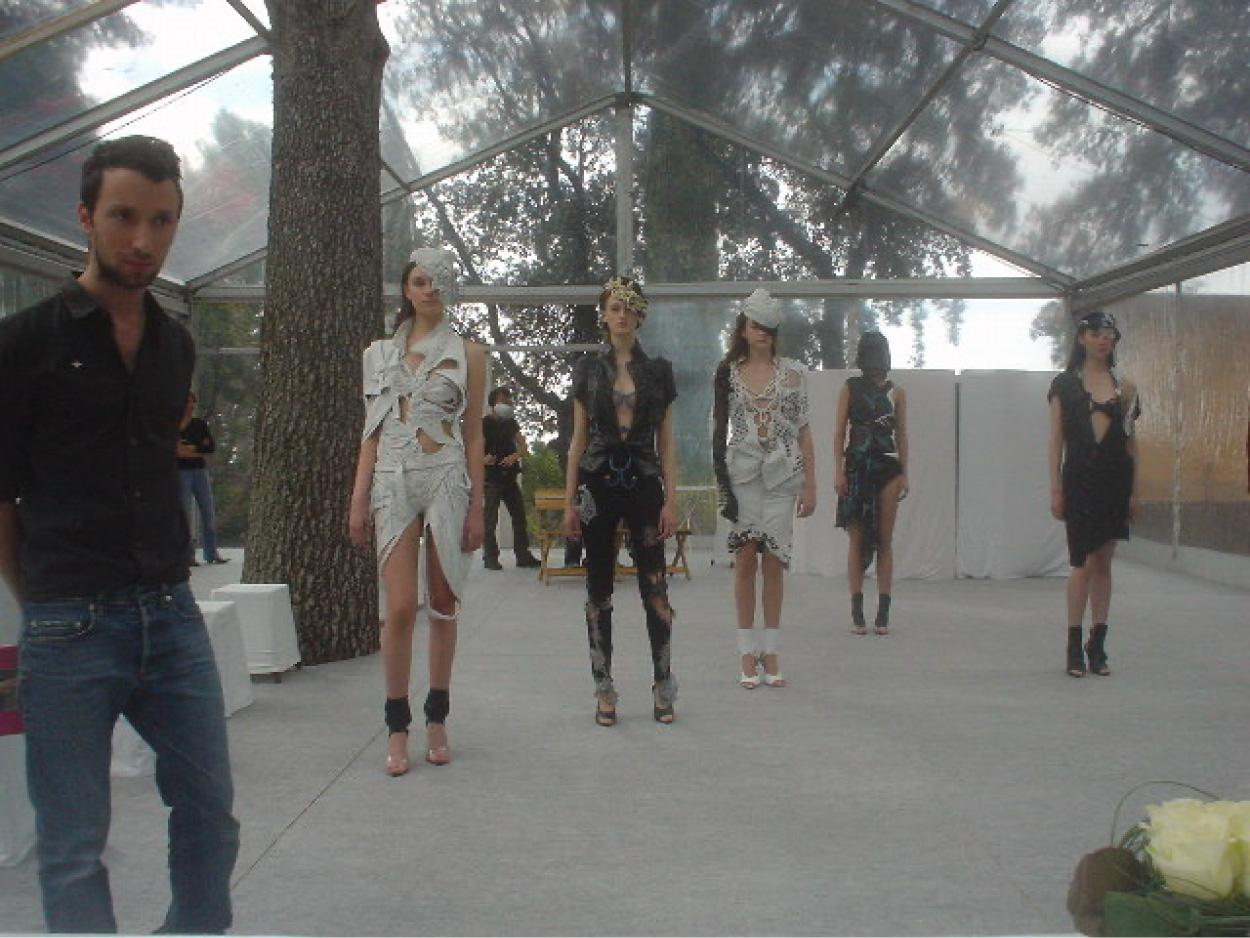
A young Anthony Vacarello, director of Yves Saint Laurent, presents his graduate collection at Festival Hyeres, 2004. Photo by Joseph Quartana.
Joseph’s authority extended into the space where fashion’s future was funded, judged, and legitimized, career-conversion spaces. He was invited to judge the Festival Hyères, a contest that could turn a young designer into an international signal. ANDAM could transform promise into capital and Paris credibility. Gwand and the Swiss Textiles circuit could make materials, production, and press suddenly possible.
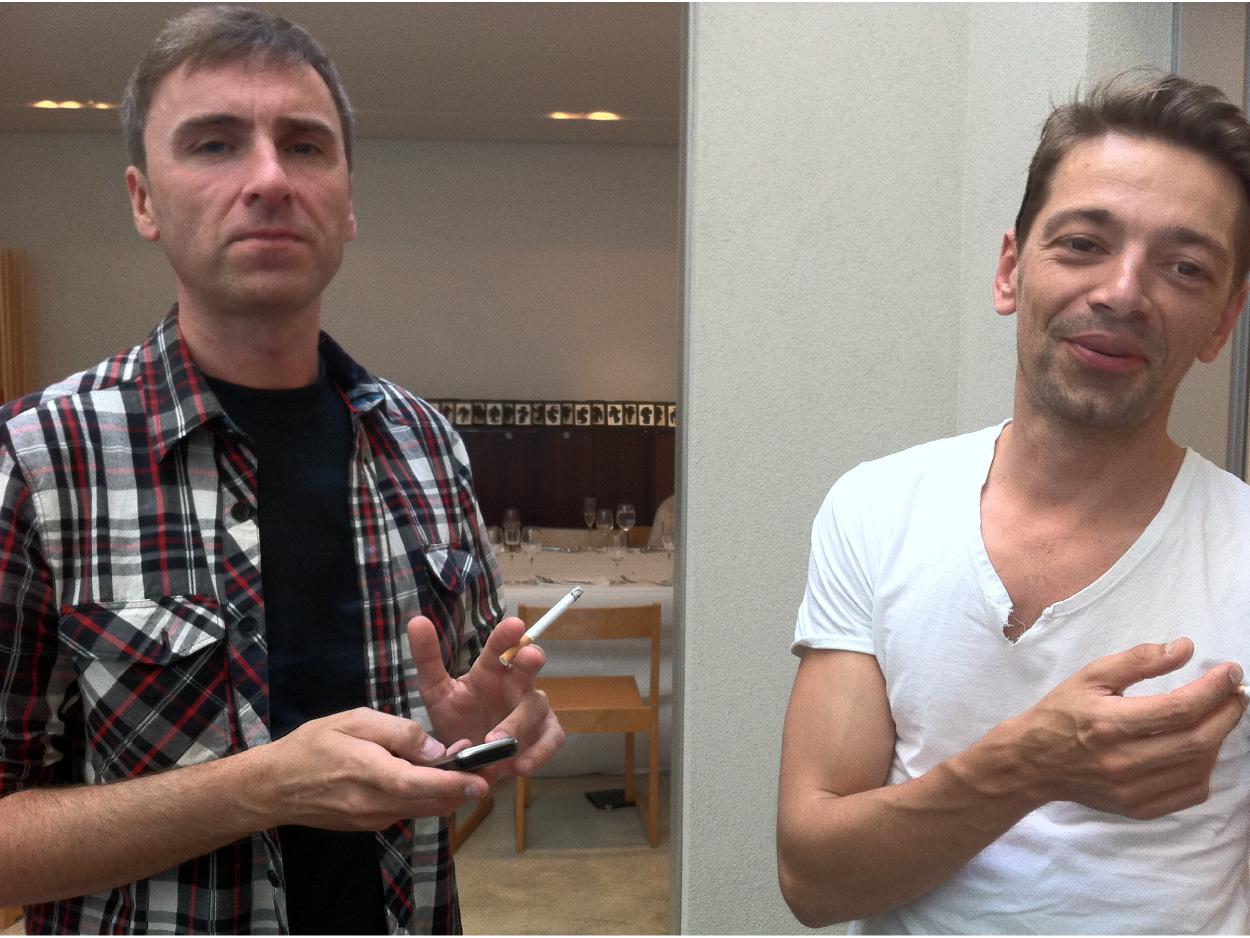
Raf Simons of Prada and Pieter Mueller of Versace at the 2012 jury for Le Cambre in Brussels. Photo by Joseph Quartana.
Joseph sat inside that European prize-and-school ecosystem as a juror for graduating classes of both The Vienna School of Applied Arts headed by Raf Simons as well as Le Cambre in Brussels, reading talent at the moment before a young designer became an industry fact.
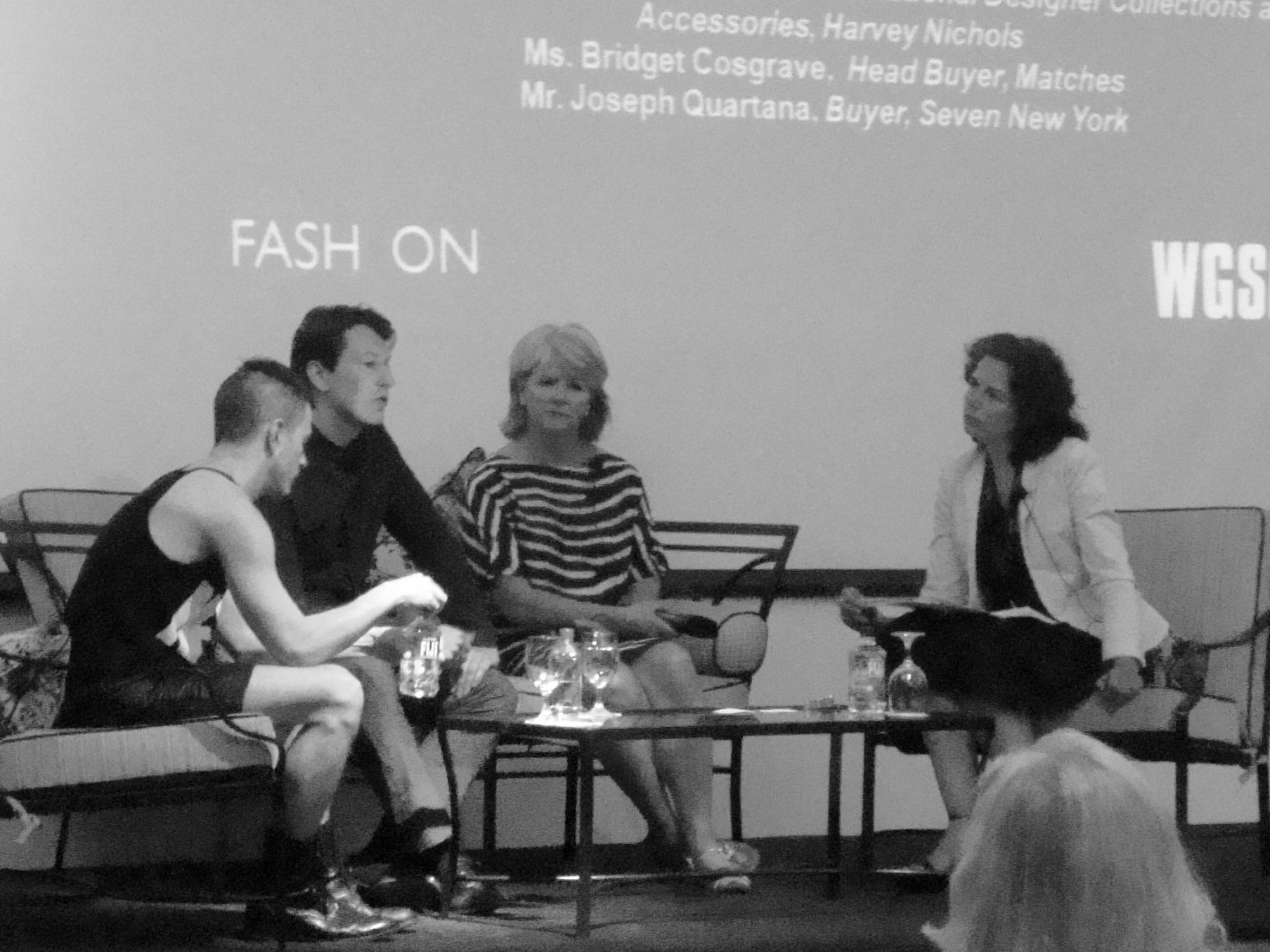
Joseph Quartana, left, as part of a WGSN fashion panel along with buyers from Harvey Nichols and Matches, 2010.
These were rooms where taste became money, mentorship, legitimacy, and momentum. Seven made Joseph a public selector. The store chose the future before the future could defend itself.
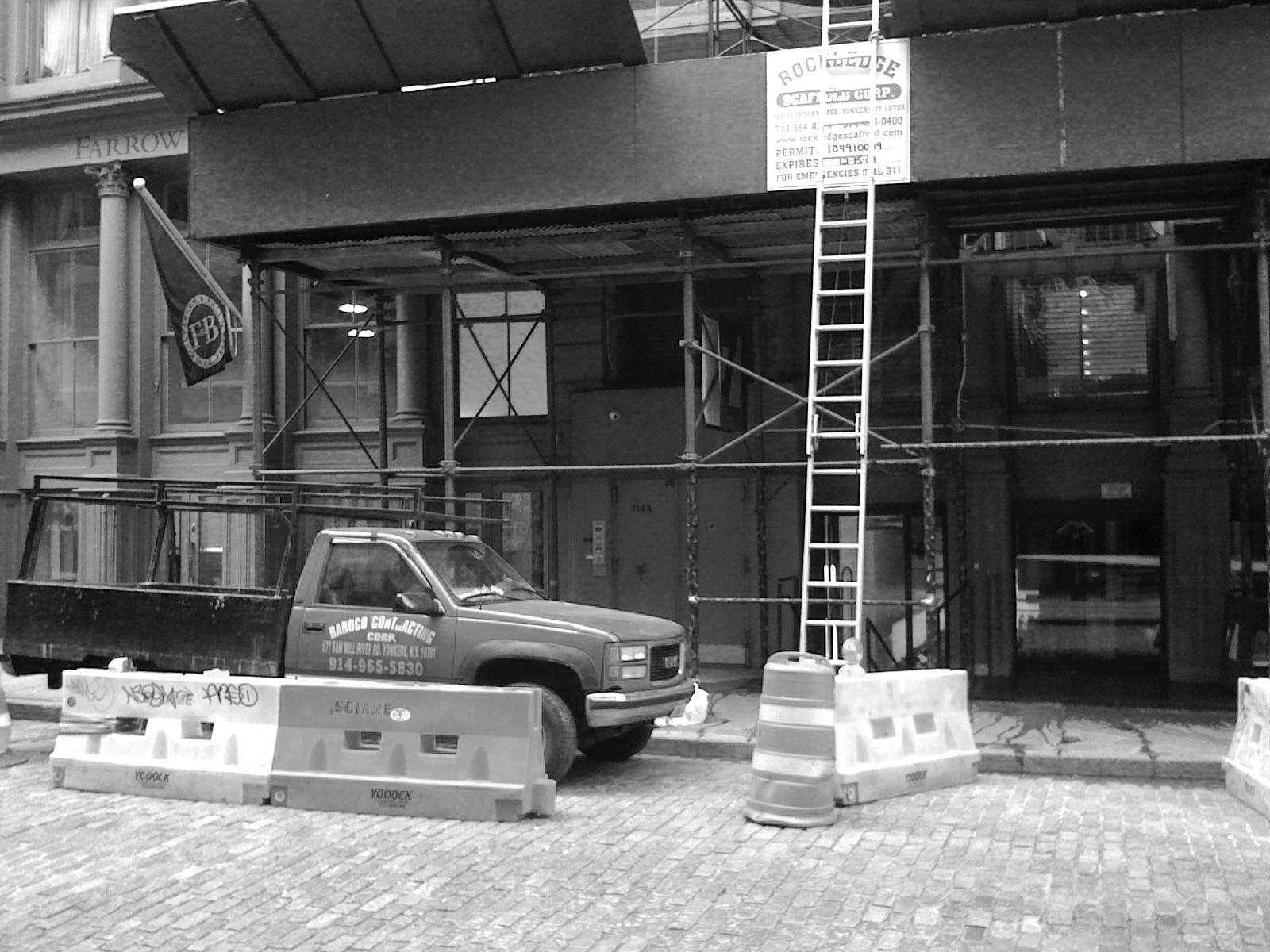
Seven New York hidden behind scaffolding and construction equipment, 2011.
Seven’s end was a New York wound.
The Soho store had been transformed through renovation, taste, and money into something more valuable than the lease recognized. Then scaffolding appeared and stayed. Visibility disappeared. Pedestrians were redirected. Cement trucks and obstruction taught people to pass the entrance. A store built on discovery was hidden from discovery.
The real-estate incentive was plain enough. A landlord could inherit a vastly improved space and replace an independent tenant with one paying many times more. The situation drew press attention because the obstruction read as pressure by other means: access turned into leverage, visibility turned into scarcity, endurance turned into a legal test.
Seven depended on walk-in traffic; the scaffolding cut off the oxygen. The legal wound turned on a missing clause in the lease. Joseph received the news while in Paris for men’s buying. A single absent sentence helped erase thirteen years of blood, sweat, and tears.
A temple can be buried. The venom from the injustice returned in another form.
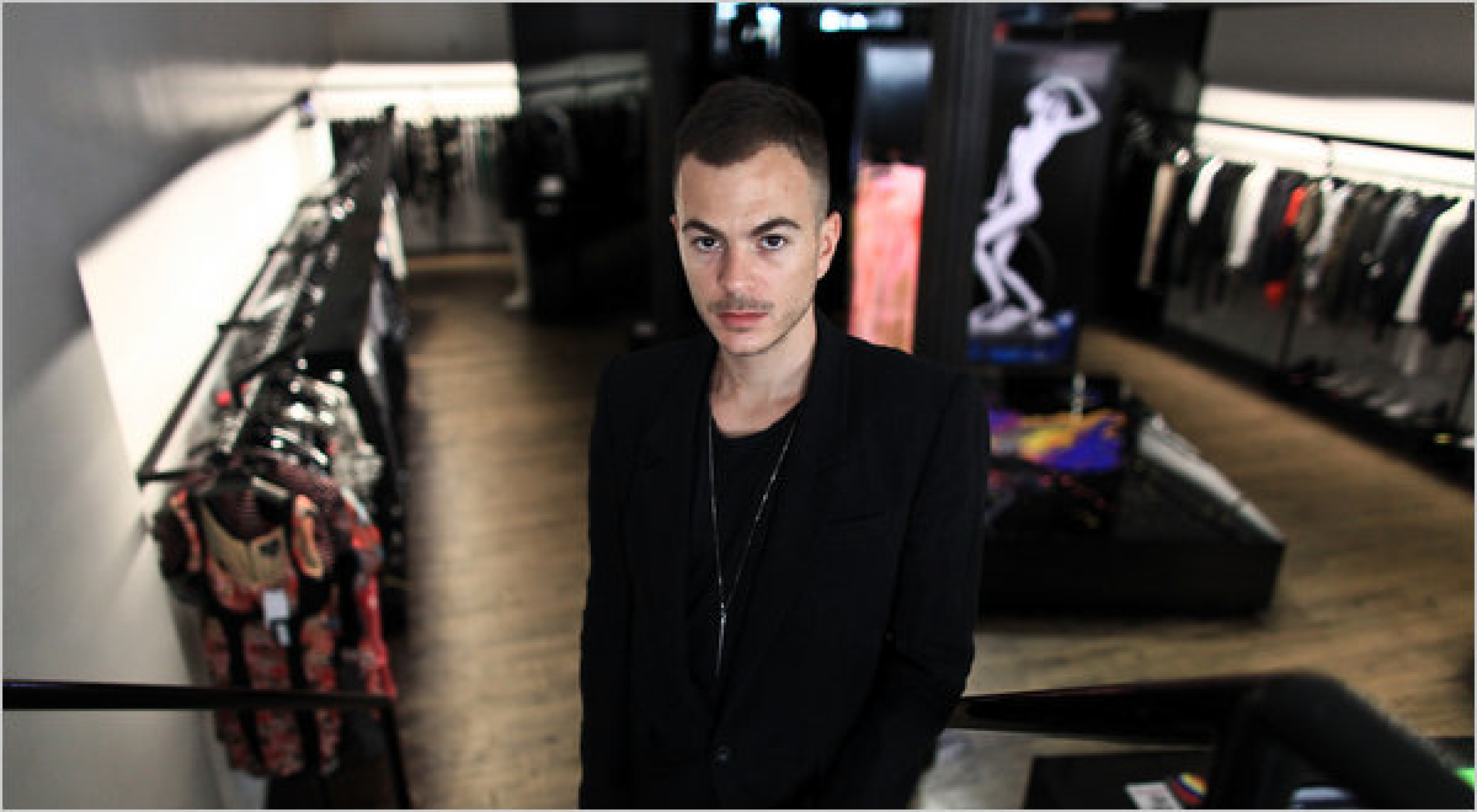
Joseph Quartana in front of Seven New York, 2011.
Photo by the NY Times.
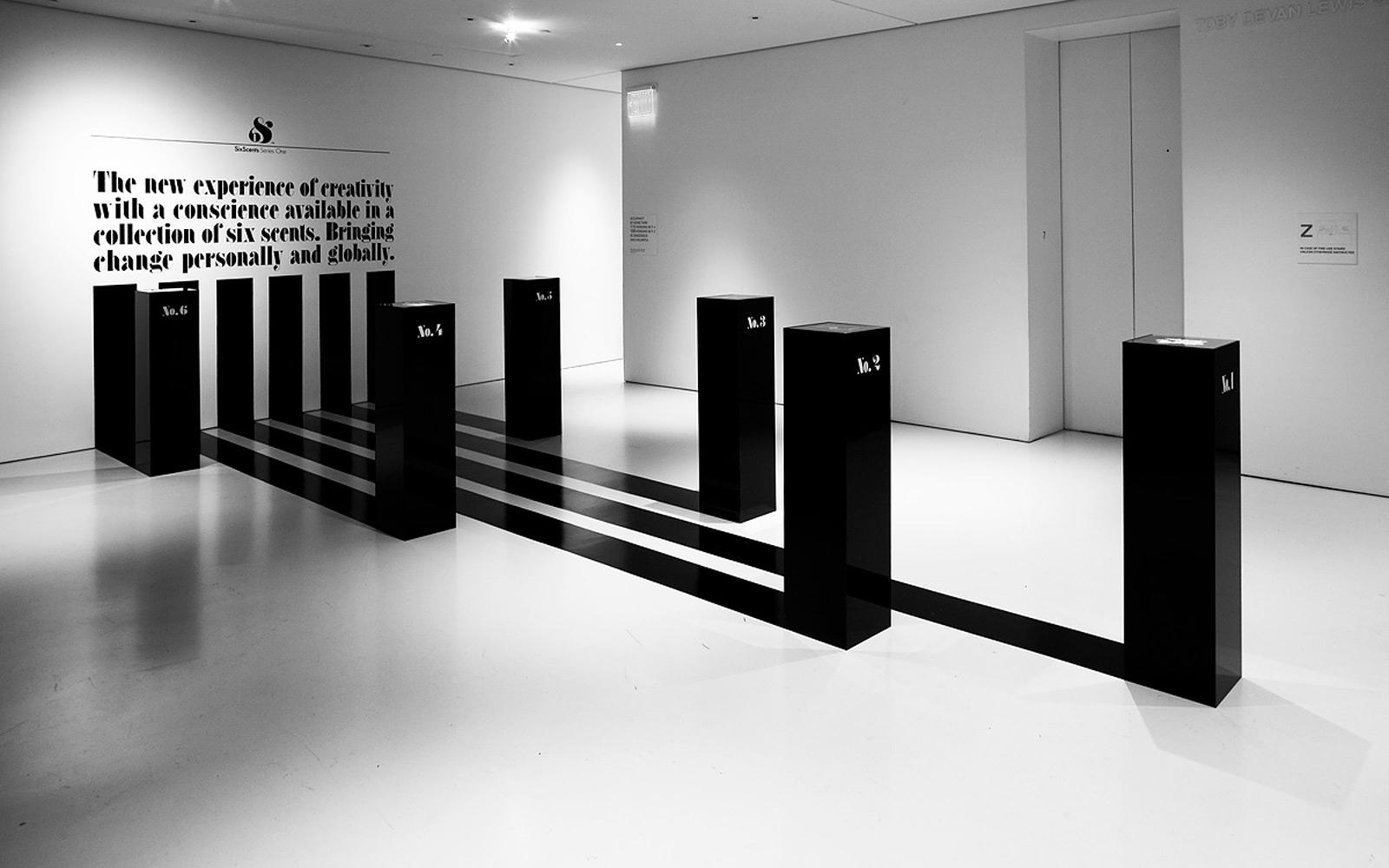
SixScents Parfums monolithic scent atomizers at its launch at the New Museum, NYC, 2008.
SixScents Parfums was Joseph's bridge from fashion to fragrance.
Founded in 2008, the project paired fashion designers with edge and vision with accomplished perfumers trained inside a more traditional industry. The collision created the magic. Joseph had lived the fashion sequence intimately: concept becomes sketch, sketch becomes show, show becomes object, object becomes reception, reception becomes culture. Six Scents applied that sequence to perfume.
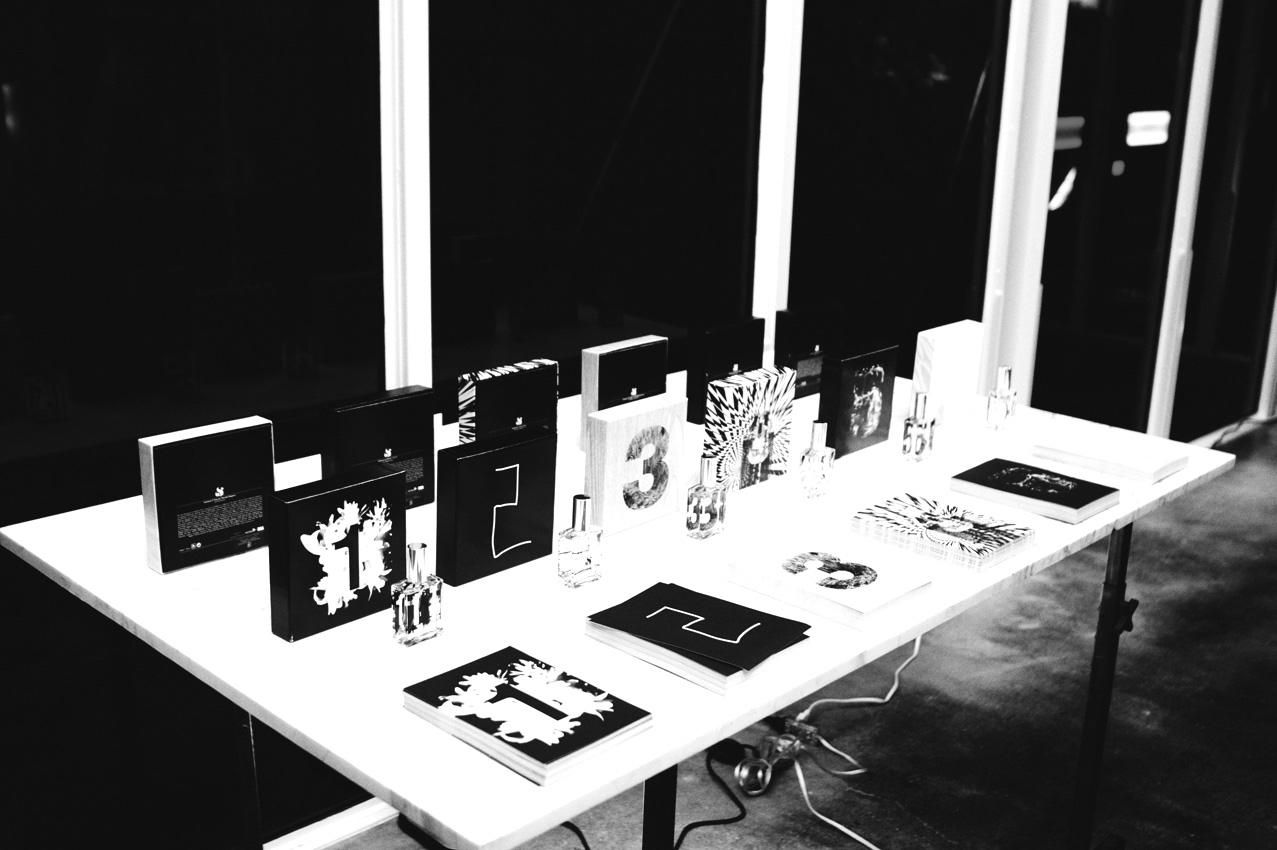
SixScents Parfums Series One
The designers were the charge source. Joseph later called them “the kernels of energy in the fashion industry” and “the pot of gold at the end of the rainbow.” The perfumers were the translators: people capable of taking that charge and making it material, wearable, and unforgettable.
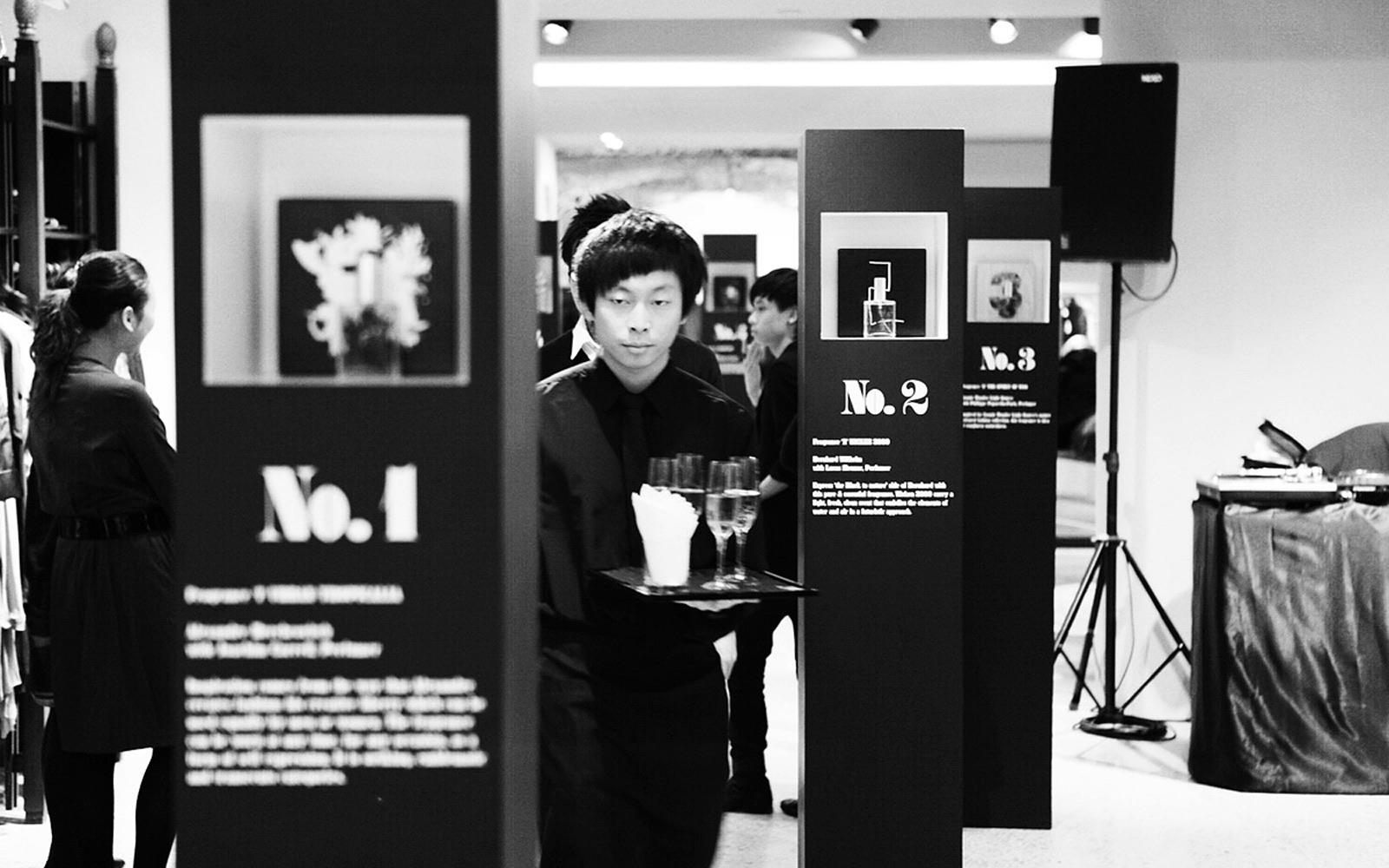
SixScents Parfums launch at Joyce, Hong Kong, 2009.
Across 28 distinct fragrances and more than 230 prestigious sales points, Six Scents turned designer collaboration into a serious fragrance platform. Colette in Paris, 10 Corso Como in Milan, Isetan in Tokyo, and other discerning retailers carried the work. The creative field stretched from American luxury and London futurism to Danish surrealism, Korean tailoring, Parisian provocation, and dark theatrical fashion. The perfume side brought in elite noses from the level of Givaudan and Symrise — major fine-fragrance houses where many of the world’s most technically accomplished perfumers work — and asked them to make those designer worlds breathe on skin.
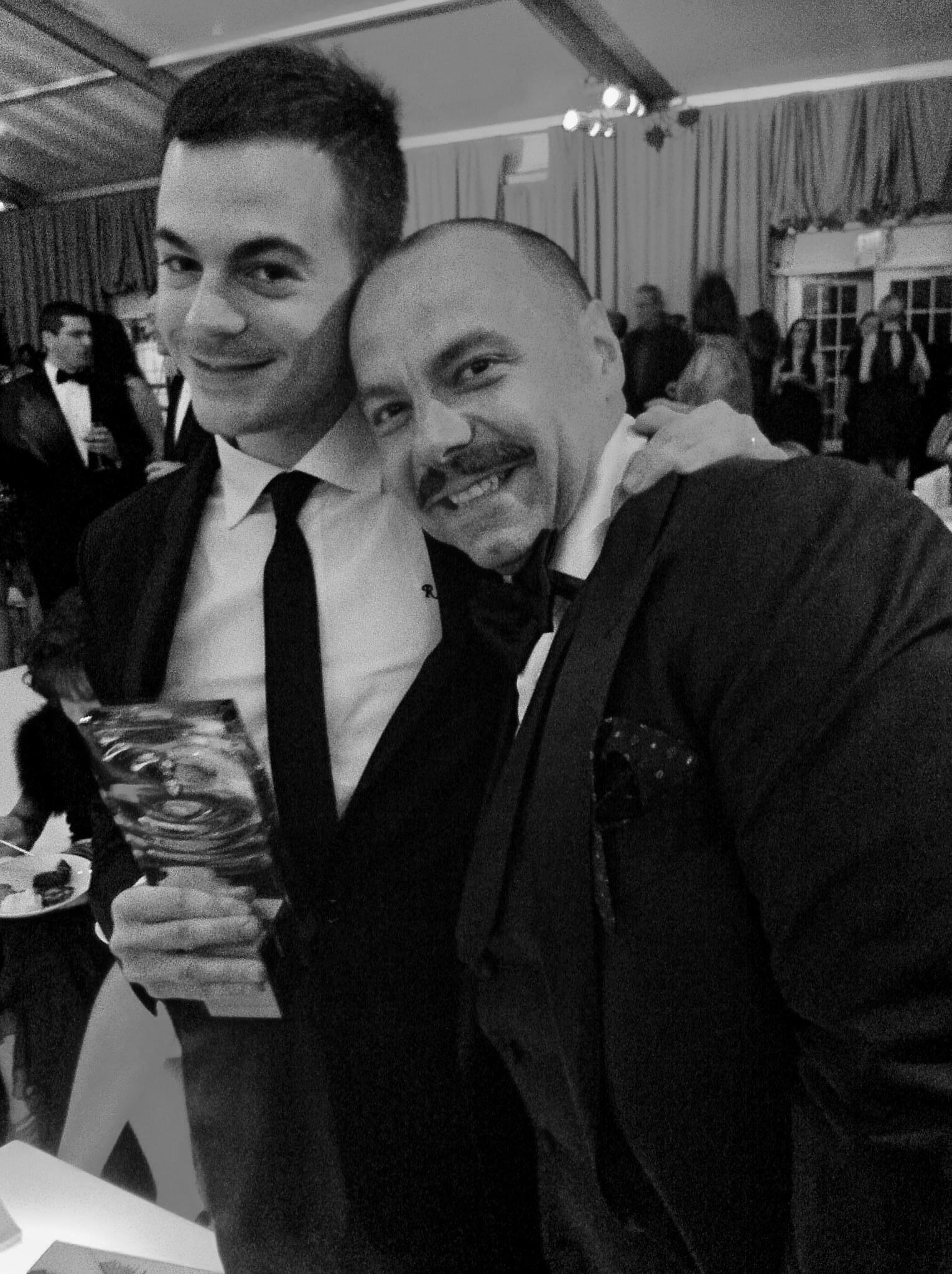
Joseph Quartana and Rodrigo Flores-Roux after accepting The Fragrance Foundation's Best Indie Award in 2011 for SixScents Series Three.
Six Scents won major recognition, including Best Indie recognition in the Fragrance Foundation award cycle and a Cannes Lion for innovation in fragrance packaging. It proved that scent could carry fashion-world ideas with real artistic consequence.
That distinction became the hinge. Six Scents was curation: Joseph telling stories with other people’s work. PARFUMS QUARTANA would be authorship. It would give form to the ideas no one else was making — poison flowers, tarot as scent, vitality as golden path, perfume as the charged residue of survival.
At the same time Seven was under assault by scaffolding, partner and distributor disagreements tore the future of SixScents asunder. Years of work, accolades, global distribution, and cultural fame went up in flame in the span of 6 months in 2013.
Joseph was left dumbstruck again in front of the ruins of something he had built.
Venom was building up and it needed a vessel.
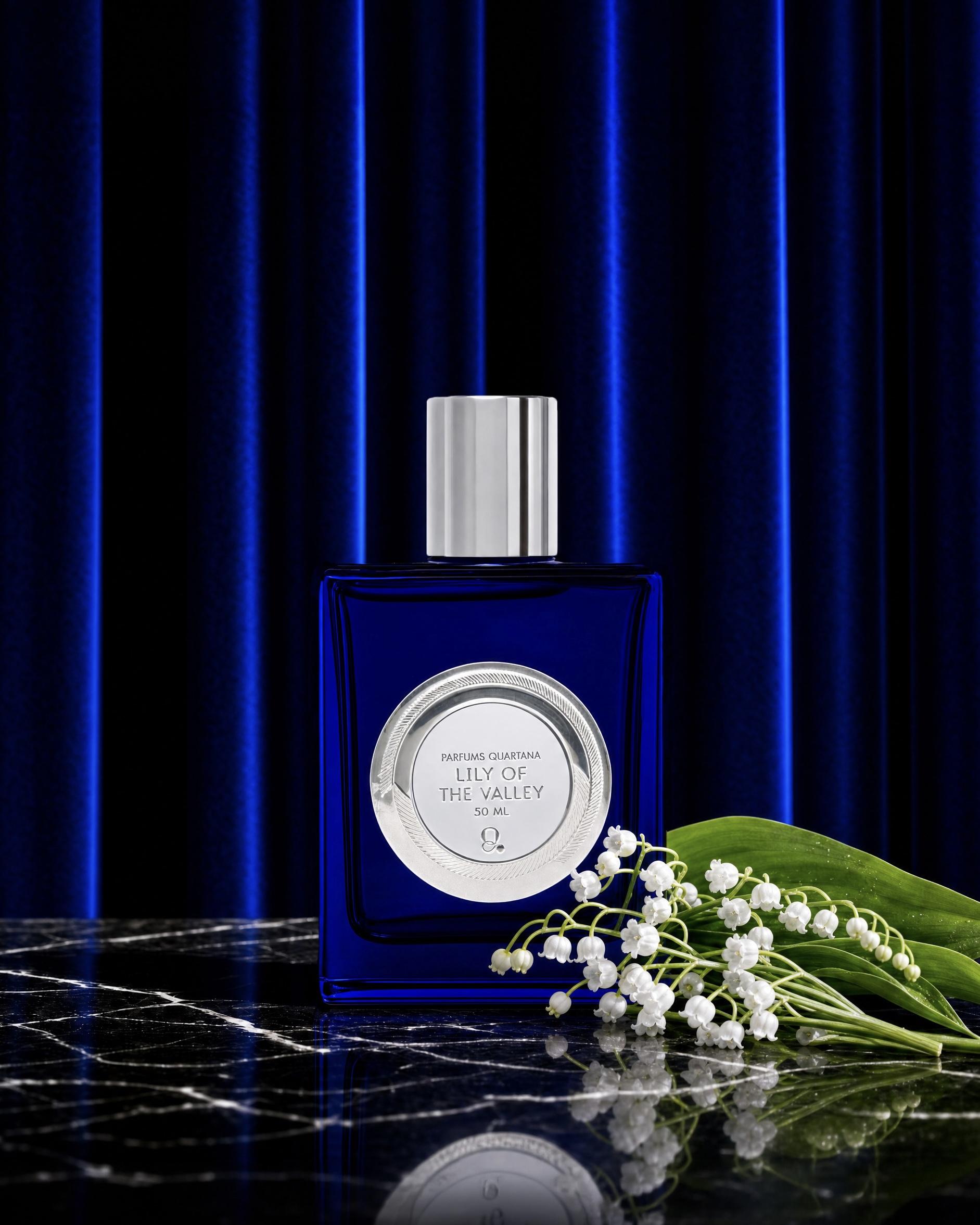
Lily of the Valley eau de parfum in 50mL with flower.
In the darkest depth of that dark period, Joseph was functioning and unraveling at once. Alcohol brought him close to the edge. In deep intoxication, near death, he began to see visions of the other side. Then an episode of Breaking Bad gave clarity to purpose: Lily of the Valley used as poison.
The reversal electrified him. A flower associated with innocence, spring, bridal bells, and sweetness carried lethal power. What would a Lily of the Valley perfume smell like if it told that truth? Why had nobody built an entire fragrance world around poisonous flowers?
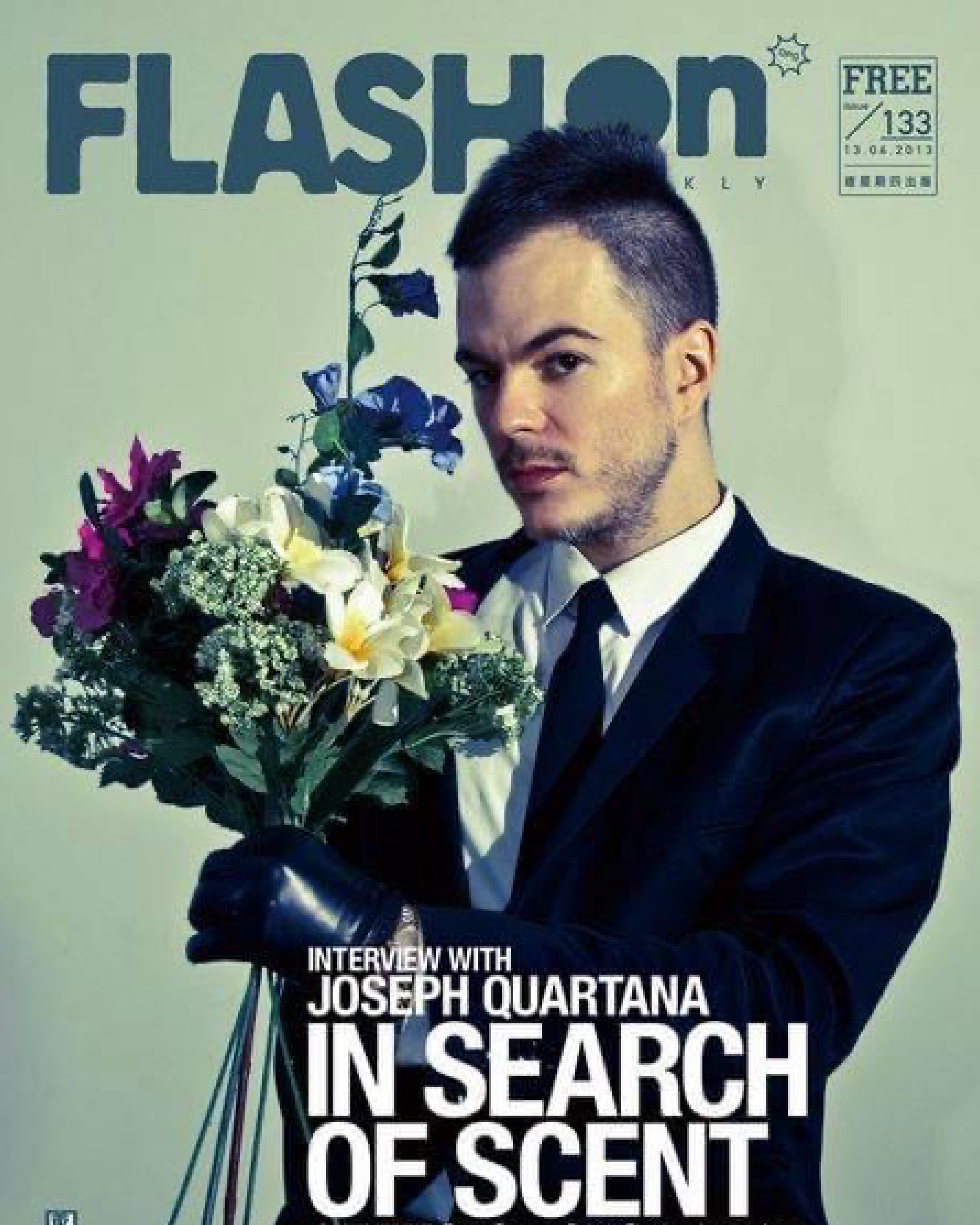
Joseph Quartana holds a poisonous bouquet on the cover of Flashon Magazine, Hong Kong, 2013.
Soon after, Rhona Stokols, then president of fine fragrance at Symrise, ran into Joseph at the Elements fragrance tradefair, asking him whether he had any good ideas for a new collection. The answer arrived like lightning: “Poison Flowers.”
Les Potions Fatales was born.
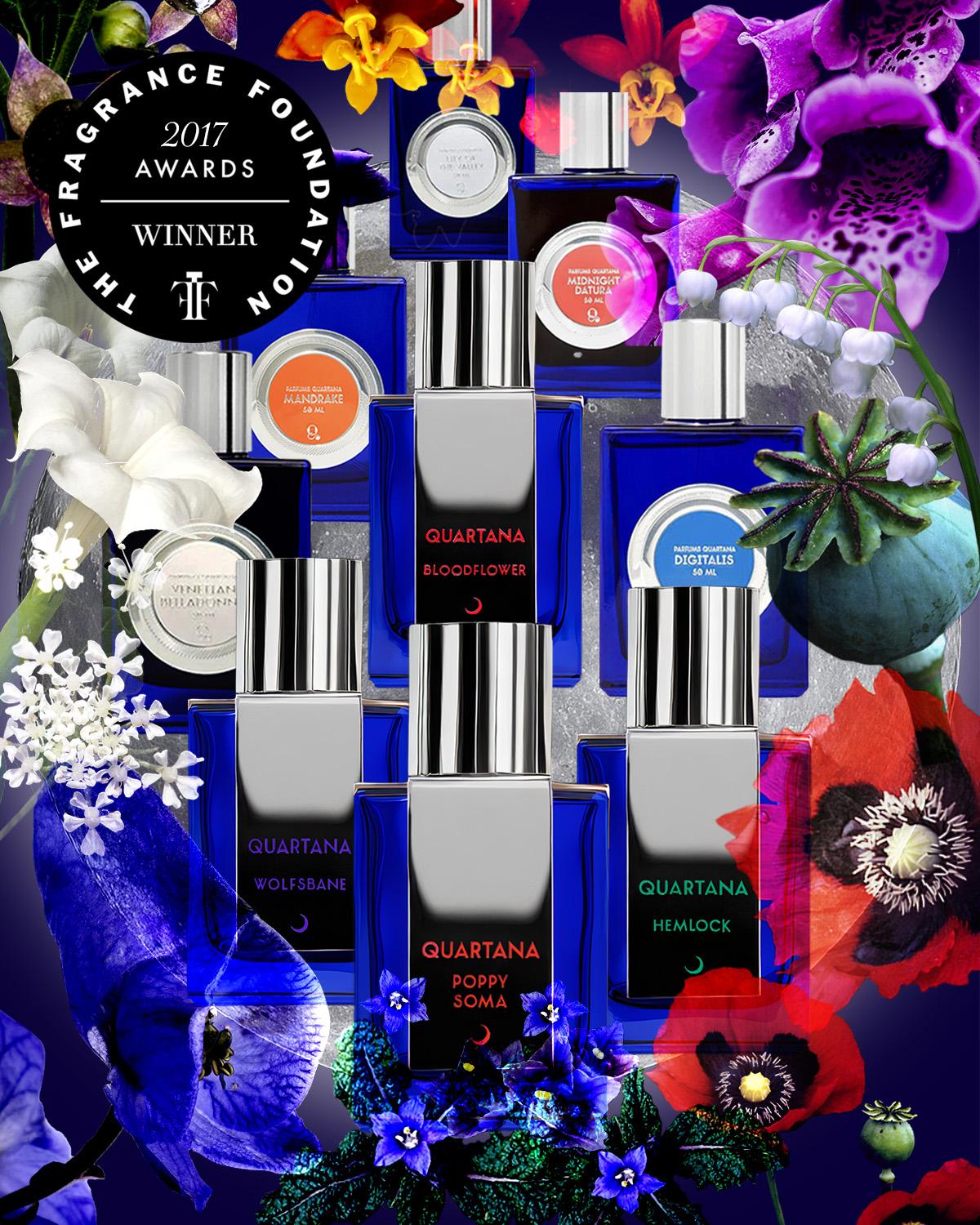
Les Potions Fatales collection editorial artwork of the bottles in front of the moon and flanked by their respective flowers.
Les Potions Fatales became the ultimate Haute-gothic fragrance world: beautiful, dangerous, perfumed, and alive with the knowledge that death can be a door one returns from.
Keats had already named the paradox:
The collection’s intelligence lives in dosage. A poisonous flower can kill, reveal, or heal depending on how it is handled. Digitalis made that truth literal through its history in heart medicine. Les Potions Fatales are built from that respect: the flower as danger, medicine, lure, warning, and threshold.
Les Potions Fatales is the vessel where the venom is alchemically transmuted into golden light. In the dying process, one can be cleansed by the spirit encountered on the other side. On the dance floor, another version of that crossing can happen through rhythm: the body moves beyond the ordinary self, touches the other side, and returns clean. 'Dance Yourself Clean', as LCD Soundsystem would later put it in their 2010 homage to the weekly experience that was cultivated at The Tunnel in the '90s. The phrase belongs to a later song, but the method is ancient.
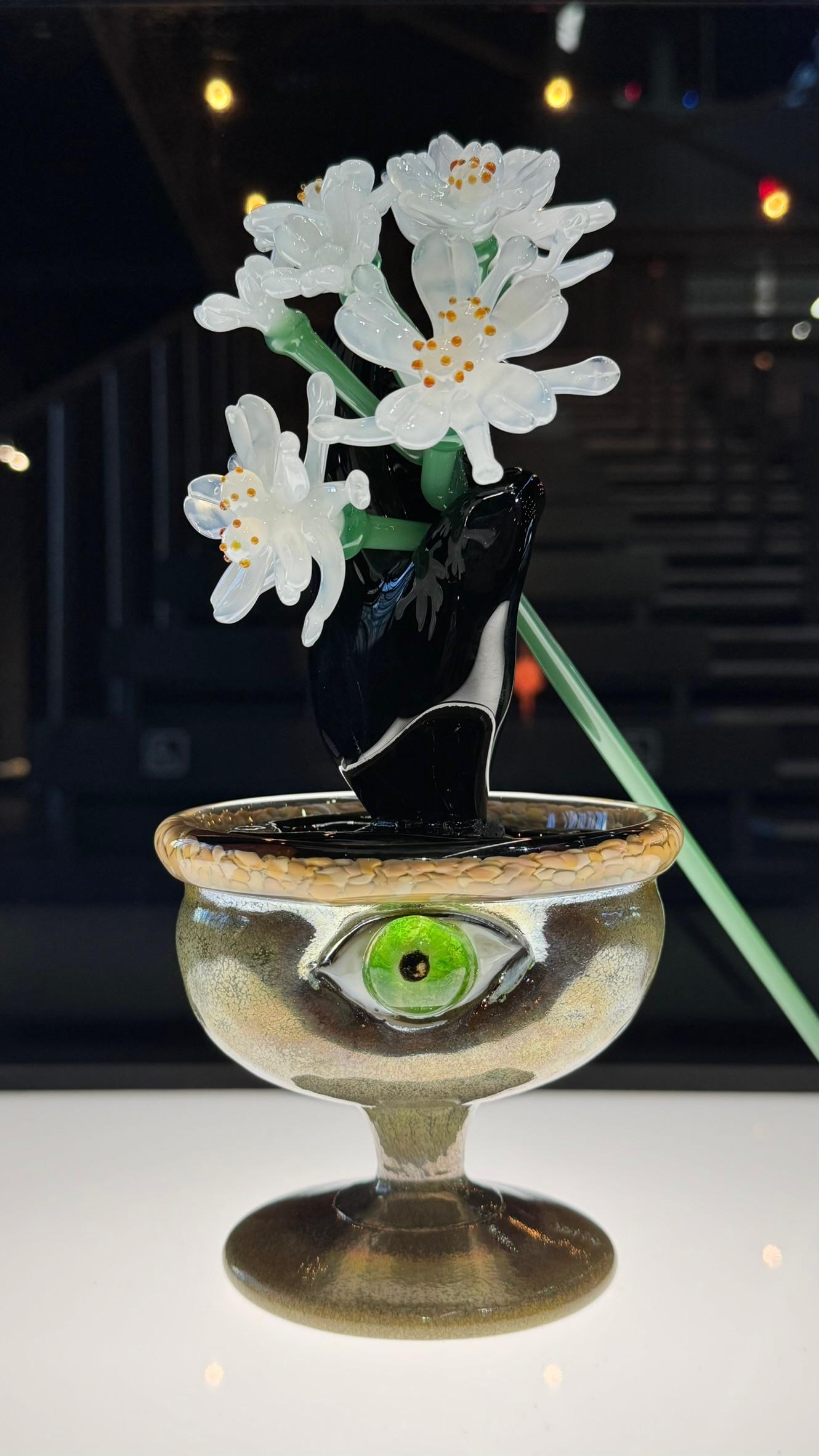
Hemlock fantasy perfume flaçon created at the Corning Museum of Glass by Catherine Ayers and Helen Tegeler.
The custom Hemlock vessel Joseph later created at the Corning Museum of Glass carries the same doctrine in object form — a cup of poison that opens the third eye, an “I have witnessed God's grace” revelation in the symbolic language of both the tarot and Qabalic doctrine.
The concept of aposematism completed the logic.
In nature, certain creatures survive by making their danger visible. Their color is a warning. Their beauty is a defense. The surface tells the predator: approach with respect or suffer the consequence.
Joseph had seen that truth in fashion and nightlife. A look could seduce and warn at once. A dancer could turn vulnerability into front. A queen could use shade as a blade. A body could enter the room wrapped in beauty and teach danger to keep its distance.
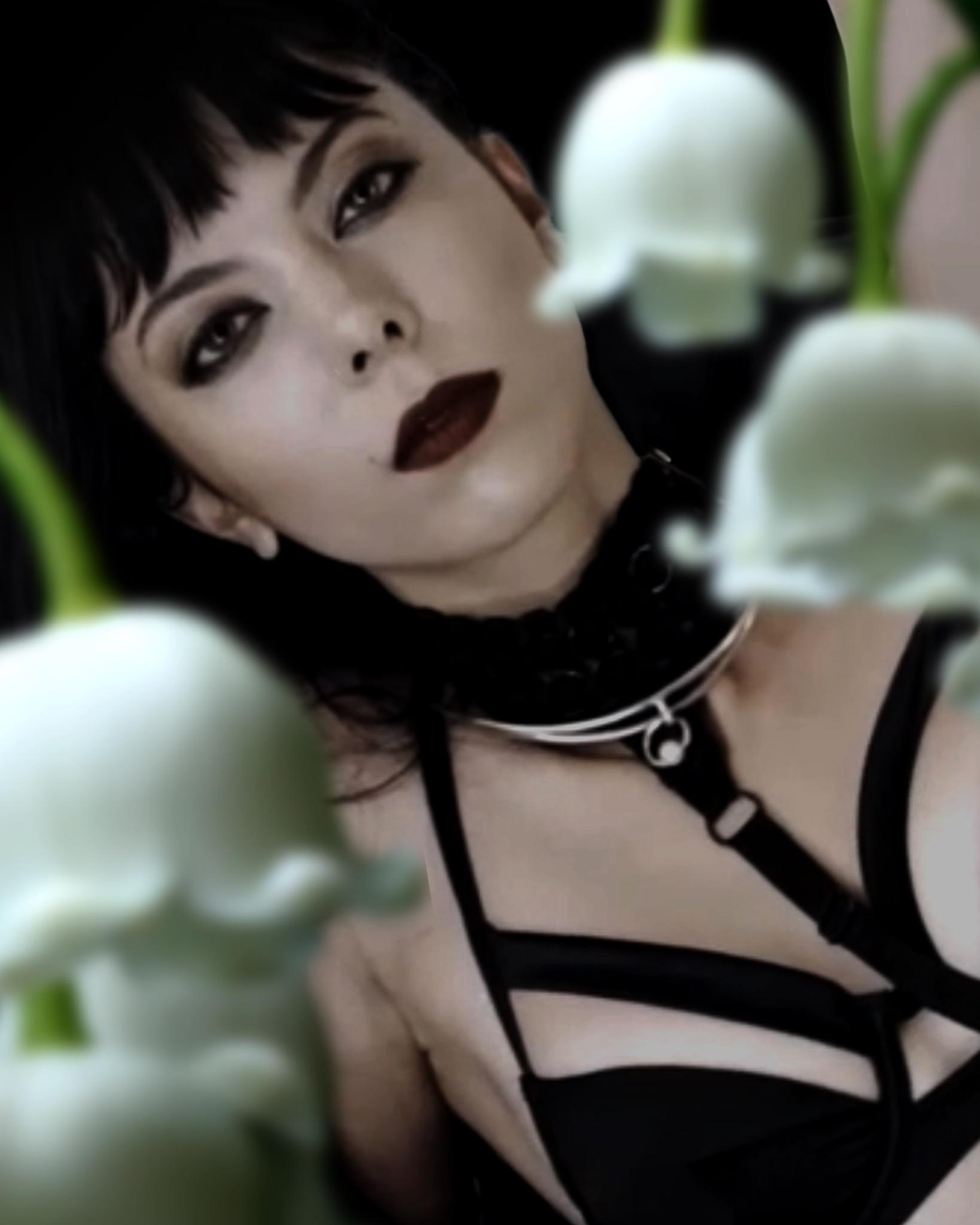
Lily of the Valley eau de parfum editorial image featuring 'Death' and lily flowers.
Les Potions Fatales made that logic olfactive: perfumes for beautiful beings who needed thorns.
The original packaging made the doctrine physical. Based on Joseph’s concept, Aerosyn Lex Mestrovic’s original packaging artwork formed the outer hallucinatory skin: the visible symptoms of poison, the swirls and distortions of the flower’s effect. Beneath it sat a silver box marked with a sigil, a ritual layer to call forth a spirit. Inside was the blue bottle, linked in Joseph’s symbolic system to the ancient containment of poison in blue amethyst: power held, charge sealed, leakage prevented.
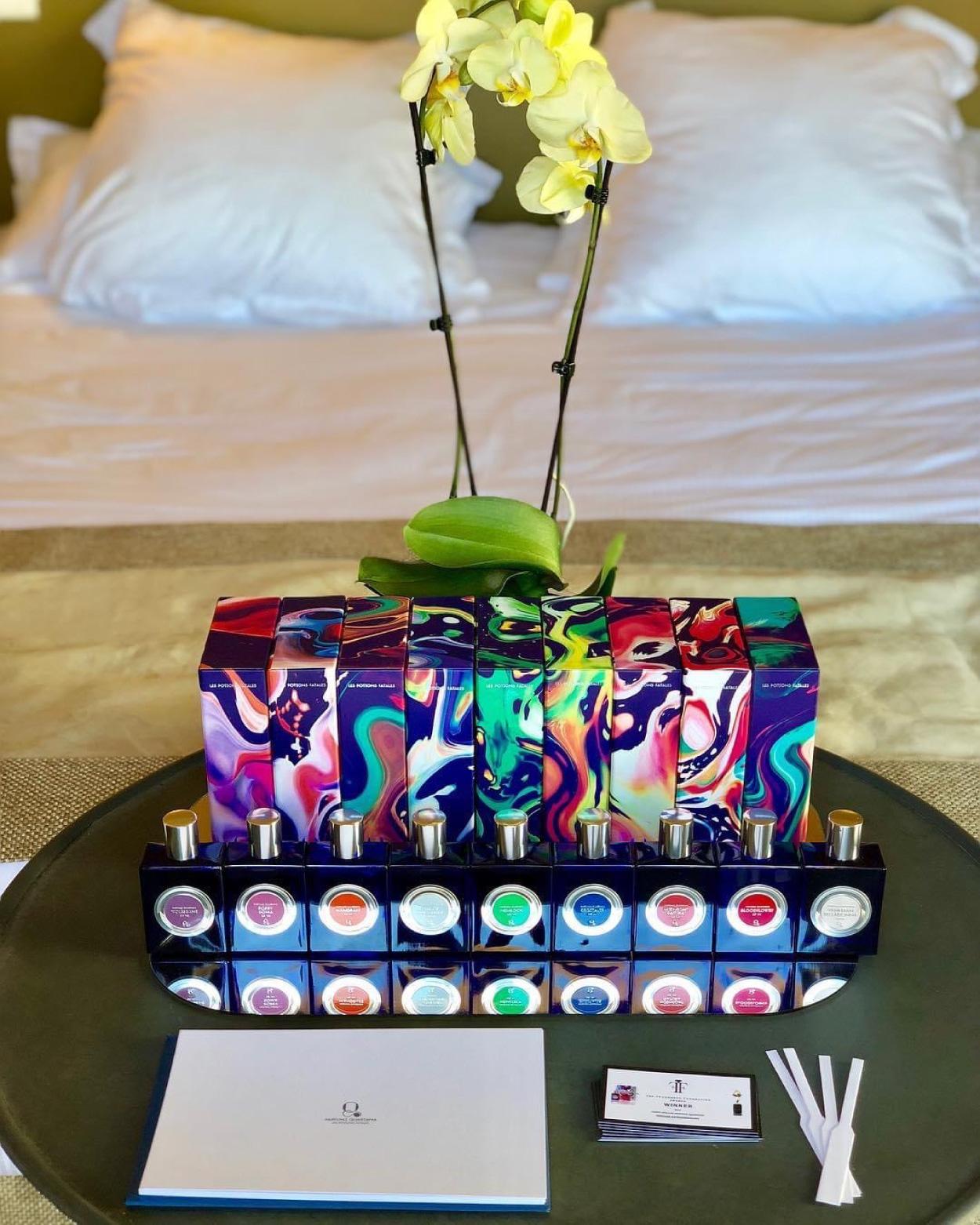
Les Potions Fatales official launch in original packaging by Aerosyn Lex Mestrovic at the Principe Di Savoia Hotel, Milan, 2016.
The outer image was the effect. The silver box was the invocation. The blue bottle inside was the poison contained.
Beauty strong enough to seduce. Danger strong enough to protect.
Poppy Soma carried the proof.
Joseph worked on the perfume for three years and hundreds of variations with David Apel and Emilie Coppermann, who interestingly enough was the understudy of Jean-Louis Siuzac, creator of the original Opium for Yves Saint Laurent, one of the monumental narcotic-floral perfumes of the twentieth century. The fragrance began with an ambition as dangerous as the flower itself: to step into the territory forged by Emilie's mentor but to create a modern interpretation with its own unique mythology, power, and erotic intelligence.
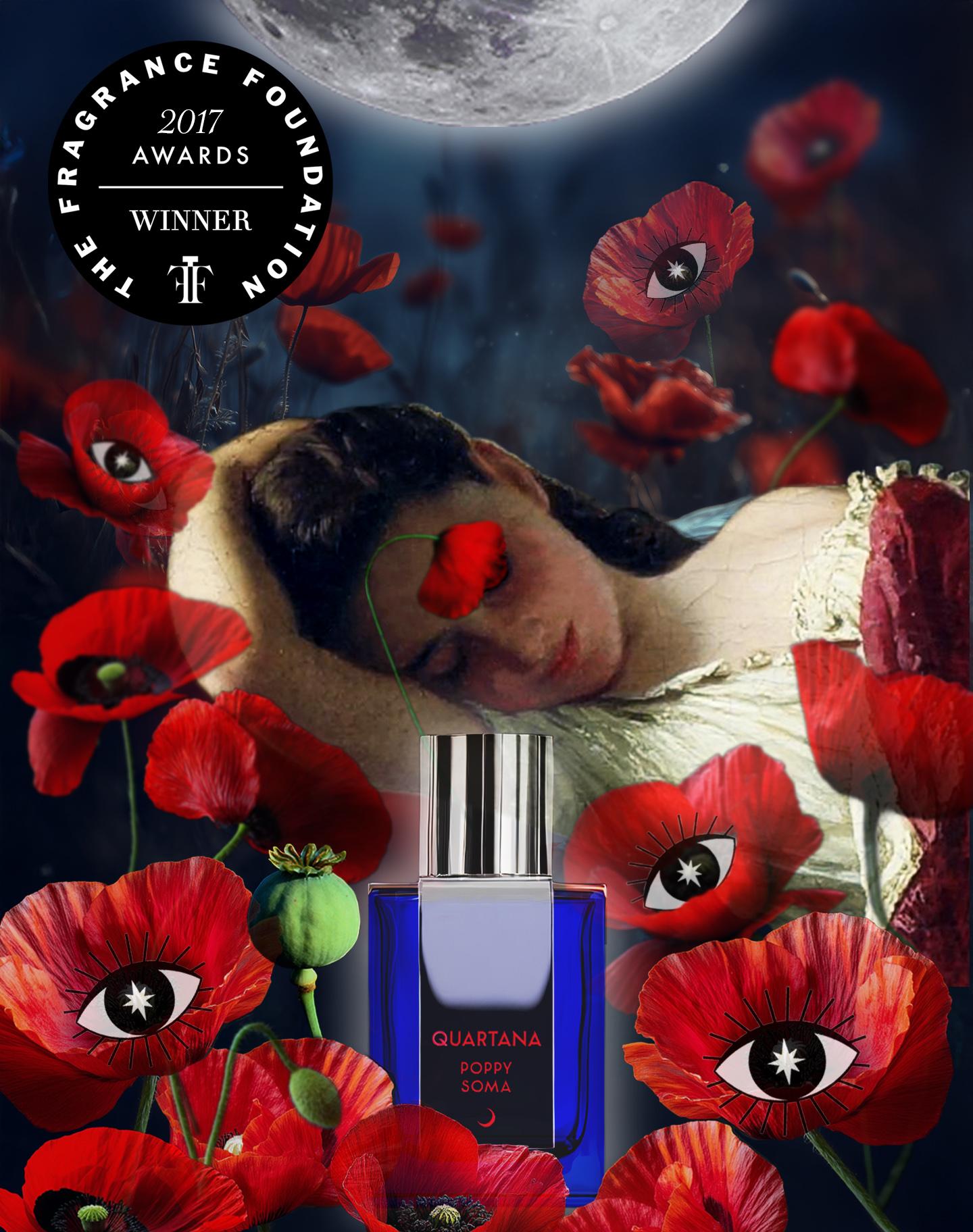
Poppy Soma extrait de parfum editorial image with girl sleeping in a Poppy field.
The white florals are the body of the spell. Jasmine sambac, gardenia, rose, and tuberose carry the heat; tuberose becomes the moon of the fragrance, full and hypnotic. Sichuan pepper and red chili bring the spark. Frankincense, pyrogenated styrax, and labdanum build the architecture of smoke around the bloom. Musk brings the rite back to skin, where the story becomes flesh.
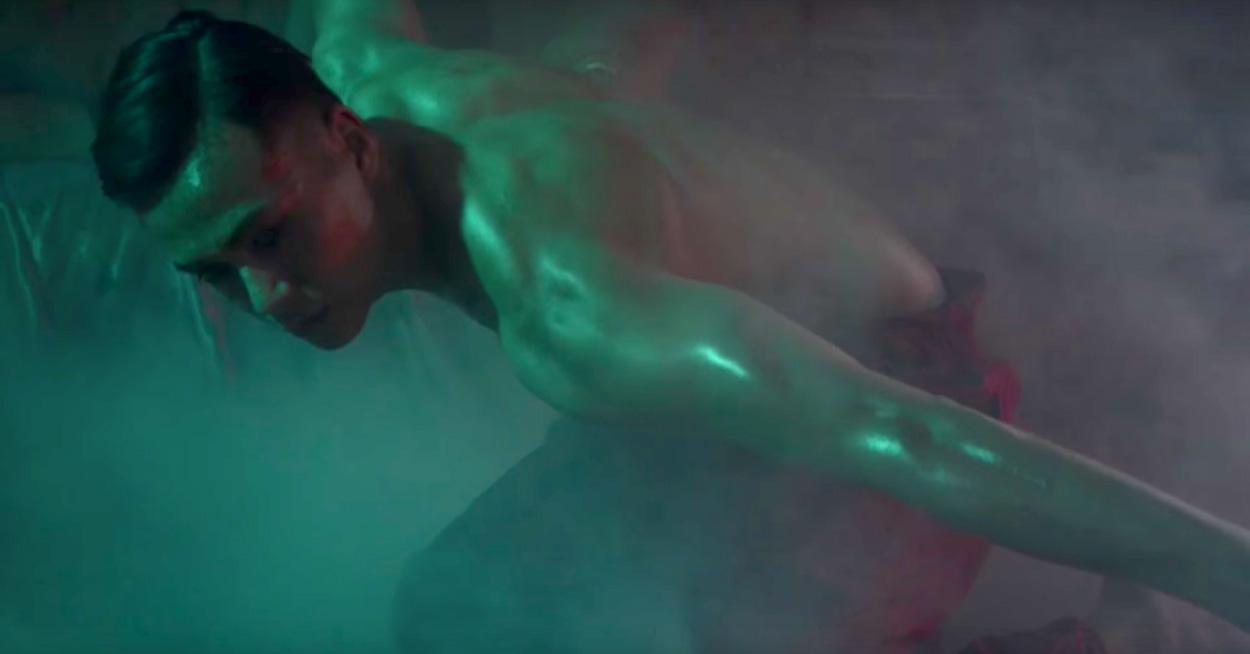
Poppy Soma extrait de parfum opium den film still. Photo by Neil Francis Dawson.
Poppy Soma is sensual, but its sensuality has direction. It is about union as transformation, desire as current, and afterglow as power returned to the body. Its deeper logic is Taoist and tantric in the broadest poetic sense: two forces meeting, releasing vitality, and lifting the inner chamber into light. It is the Fatales fragrance where passion becomes rite.
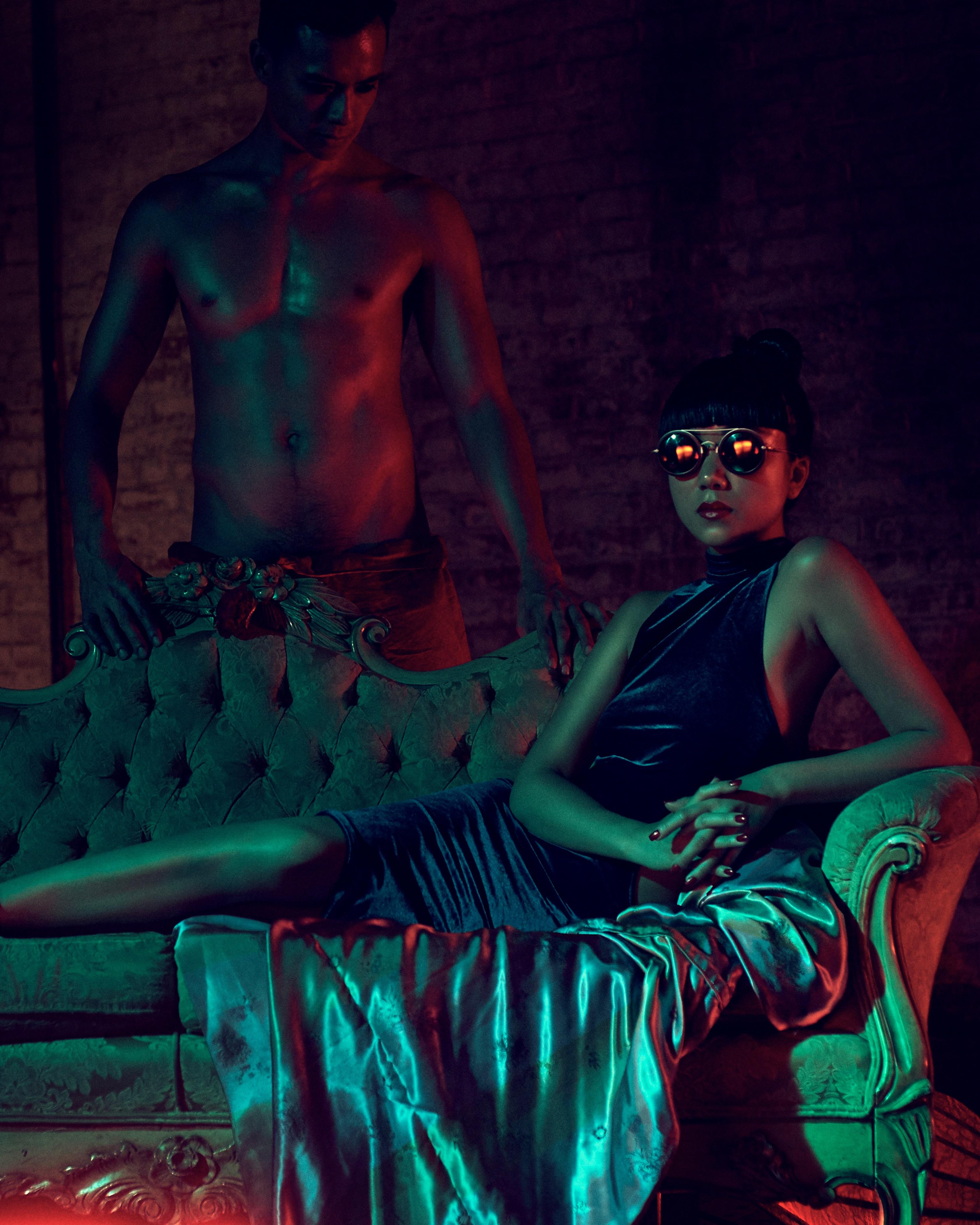
Poppy Soma extrait de parfum opium den film still. Photo by Neil Francis Dawson.
The world around the fragrance intensified when The Knick appeared on Cinemax in 2014. The television series, directed by Steven Soderbergh and set in early-twentieth-century New York medicine, surrounded surgery, vice, Chinatown opium dens, and a Cliff Martinez electronic score with an uncanny future-past atmosphere. The studio was close to the Lower East Side and Chinatown ghosts the show evoked. Poppy Soma became an opium-den dream translated through Blade Runner futurity: the sealed room against the night, neon smoke, fevered skin, fire-dreaming, the woman as chooser and director of the ritual field.

The Fragrance Foundation blindjudged Perfume Extraordinaire trophy for Poppy Soma extrait de parfum.
When Poppy Soma won Perfume Extraordinaire on that fateful evening in 2017, the scent itself had been hidden from the judges’ eyes. The work carried the claim.
By noon the next day, Joseph was awake in the hospital, asking whether the award had been real. The doctor’s answer gave the night its terrible symmetry. He had won, and he had survived.
That night changed the house.
Ierofante is PARFUMS QUARTANA’s award-winning fragrance of ignition, ascent, and revelation. Its name is Italian for Hierophant: the revealer of sacred things.
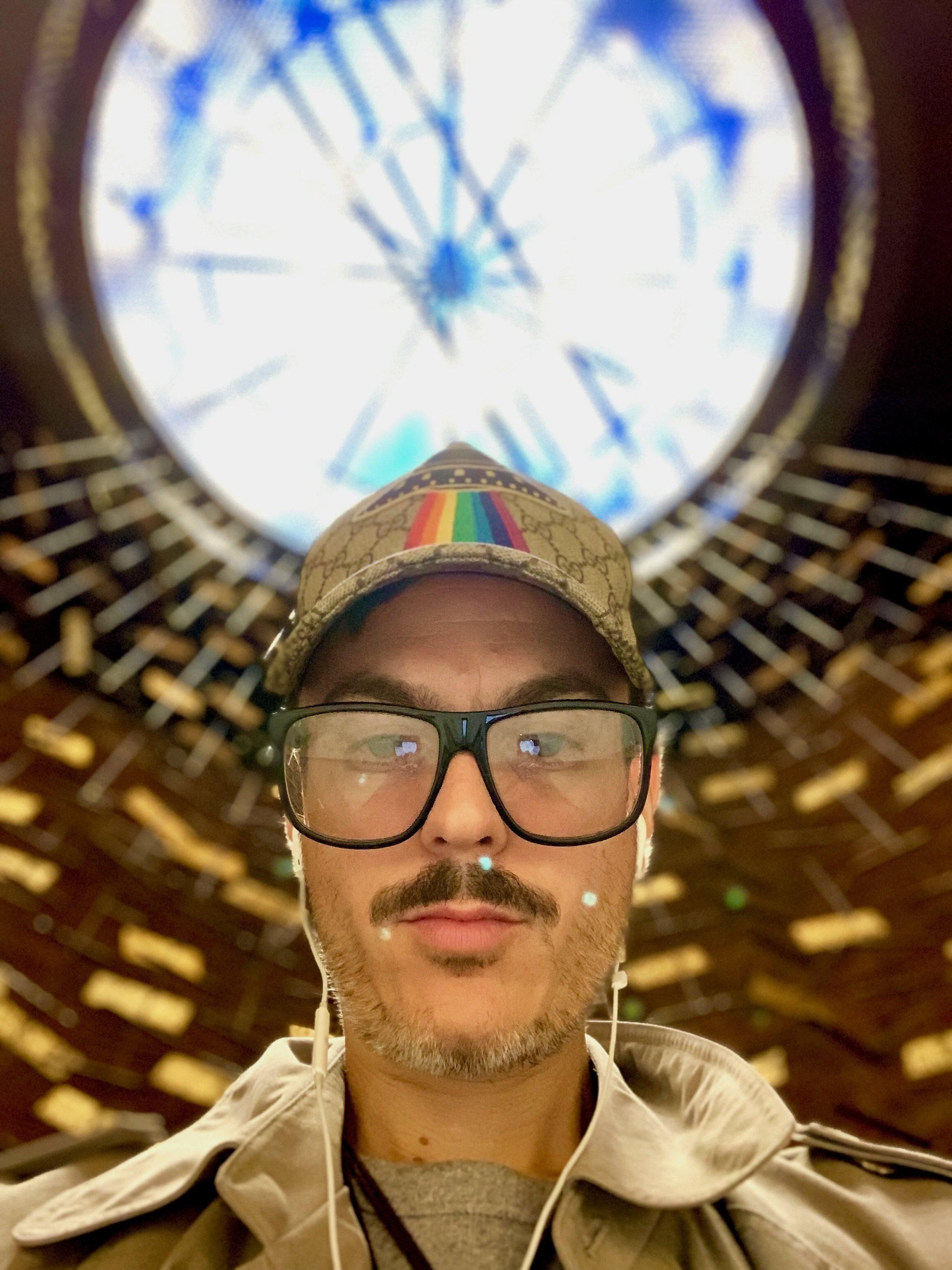
Joseph Quartana in the Eero Saarinen designed MIT Chapel, a source of inspiration for Ierofante extrait de parfum.
The perfume carries Joseph’s oldest ritual architecture forward. The Tunnel had been a Telesterion of sorts in nightlife form: an initiatory doorway as select room, bodies entering darkness, rhythm becoming ceremony, and the initiate returning changed. Seven New York gave that same structure a physical object: the black mirrored monolith, a threshold machine inside a white Soho gallery. Ierofante turns both ideas into scent.
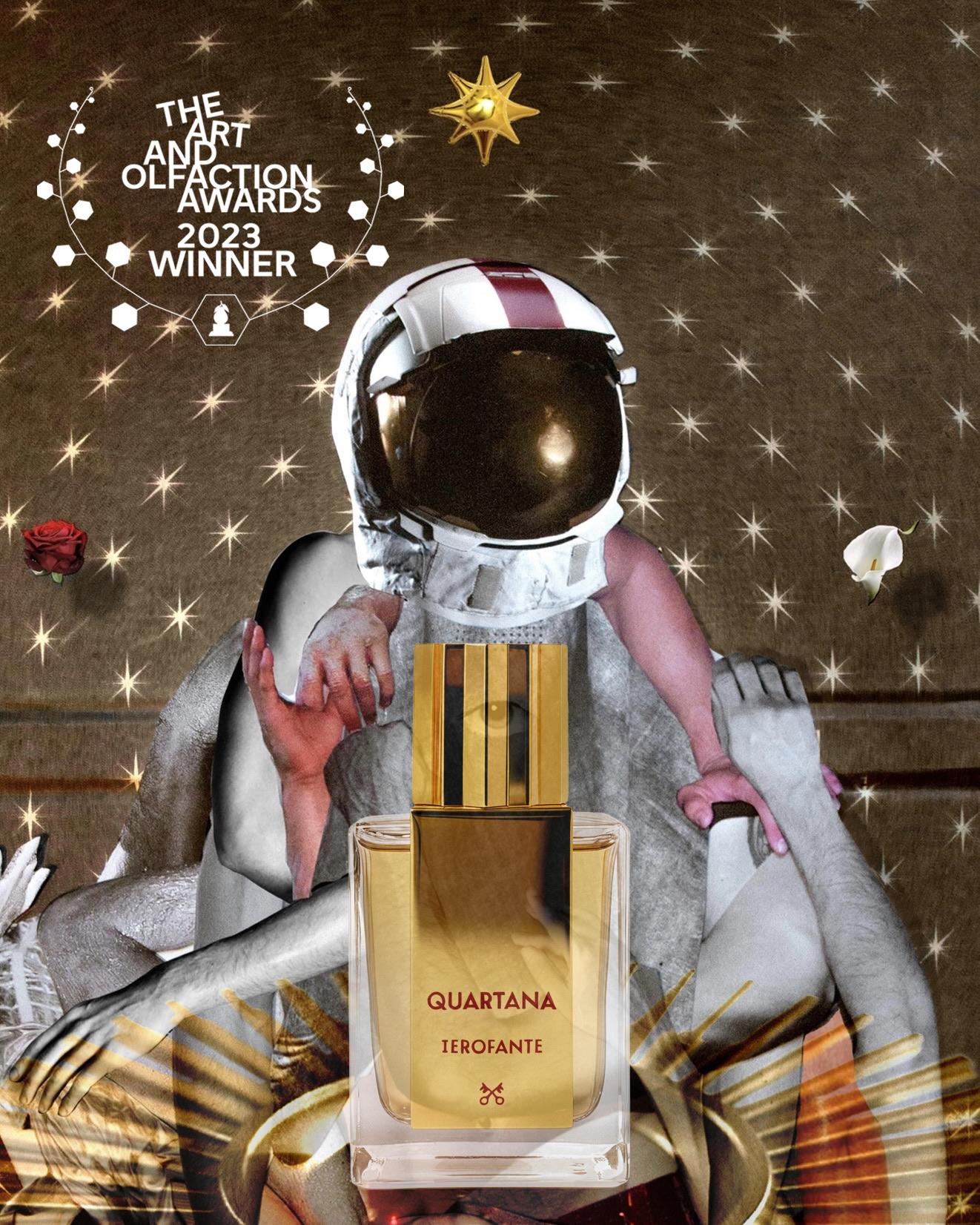
Original Ierofante collage art by Rafael Santiago.
Ierofante unfolds like a spiritual rocket journey. Nutmeg is the psychedelic spark. Suede becomes the spacesuit. Gasoline accord becomes the charged vapor of the launchpad. Pyrogenated styrax, frankincense, and smoky leather ignite the climb. Amber, myrrh, vetiver, benzoin, and cashmeran form the arrival: golden, smoky, sweet, and strangely serene — Elysium rendered as scent and carried back to earth.
The 2001 current runs underneath it. In Stanley Kubrick’s film, the monolith appears as a mystery object that changes the creature who approaches it. Ierofante is that mystery made wearable: altar, rocket, threshold, and star field at once. The wearer does not merely escape the world instead leaving ordinary gravity long enough to return with a different charge.

Ierofante film still featuring the Hierophant pointing toward heaven. Image by Rob Barriales.
That return matters. Ierofante is the bridge between the poison garden and the golden path. It is the rocket ride out of Les Potions Fatales and toward Entéléchie: the moment when survival becomes ascent, and ascent becomes the discipline of bringing heaven back into the body.
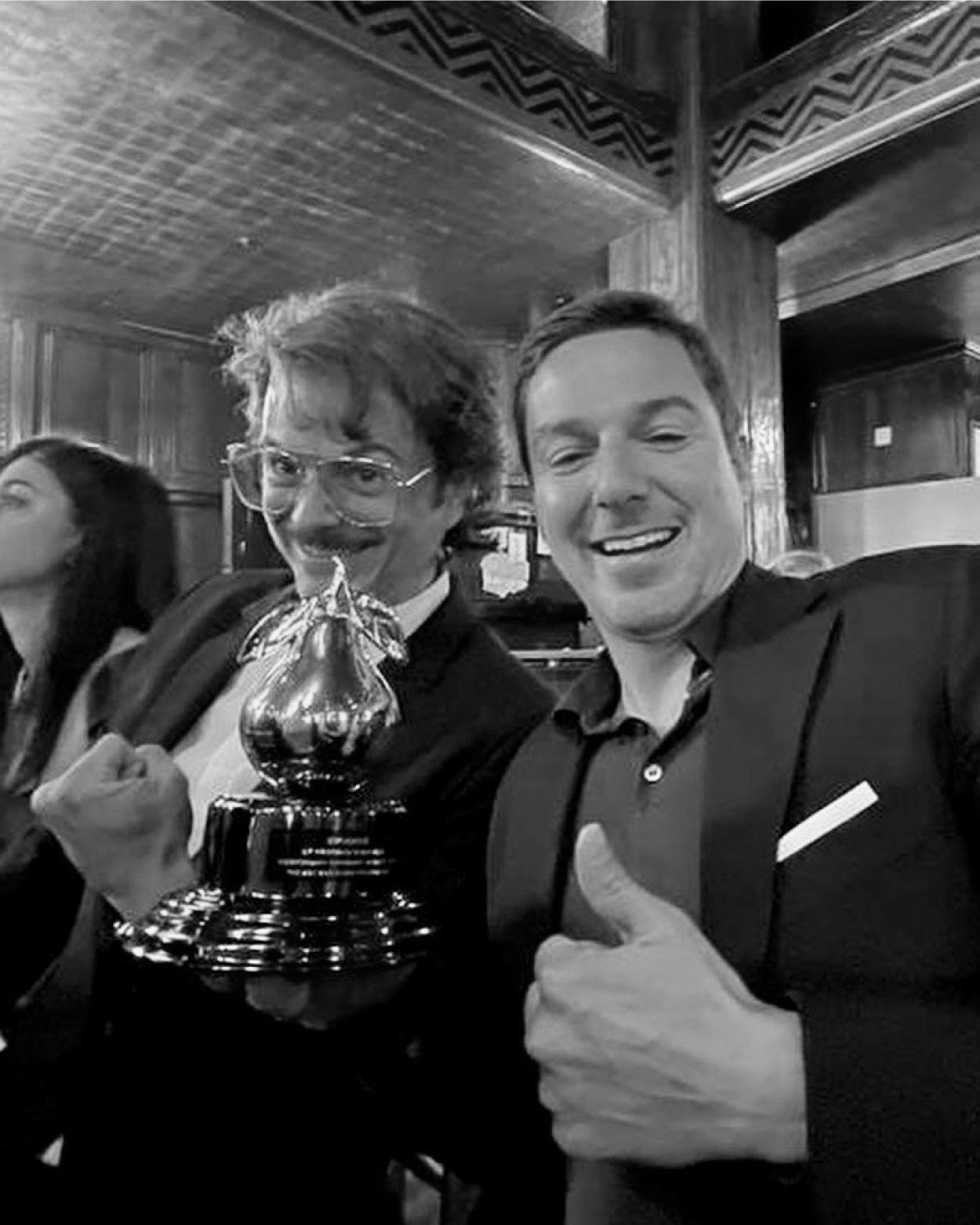
Ierofante wins the blindjudged Art & Olfaction Awards Independent Category Prize. Joseph Quartana pictured with perfumer Luca Maffei, 2023.
In 2023, Ierofante won the Art & Olfaction Independent Category Award, one of independent perfumery’s most respected juried prizes. Poppy Soma and Ierofante were consecutive PARFUMS QUARTANA releases, each recognized in a major blind-judged award context. QUARTANA did it twice, back to back, with the work hidden from the judges’ eyes.
Ierofante opened the upward door. Entéléchie asks what happens after the return.
The arc moved beyond survival. It had to become gold.
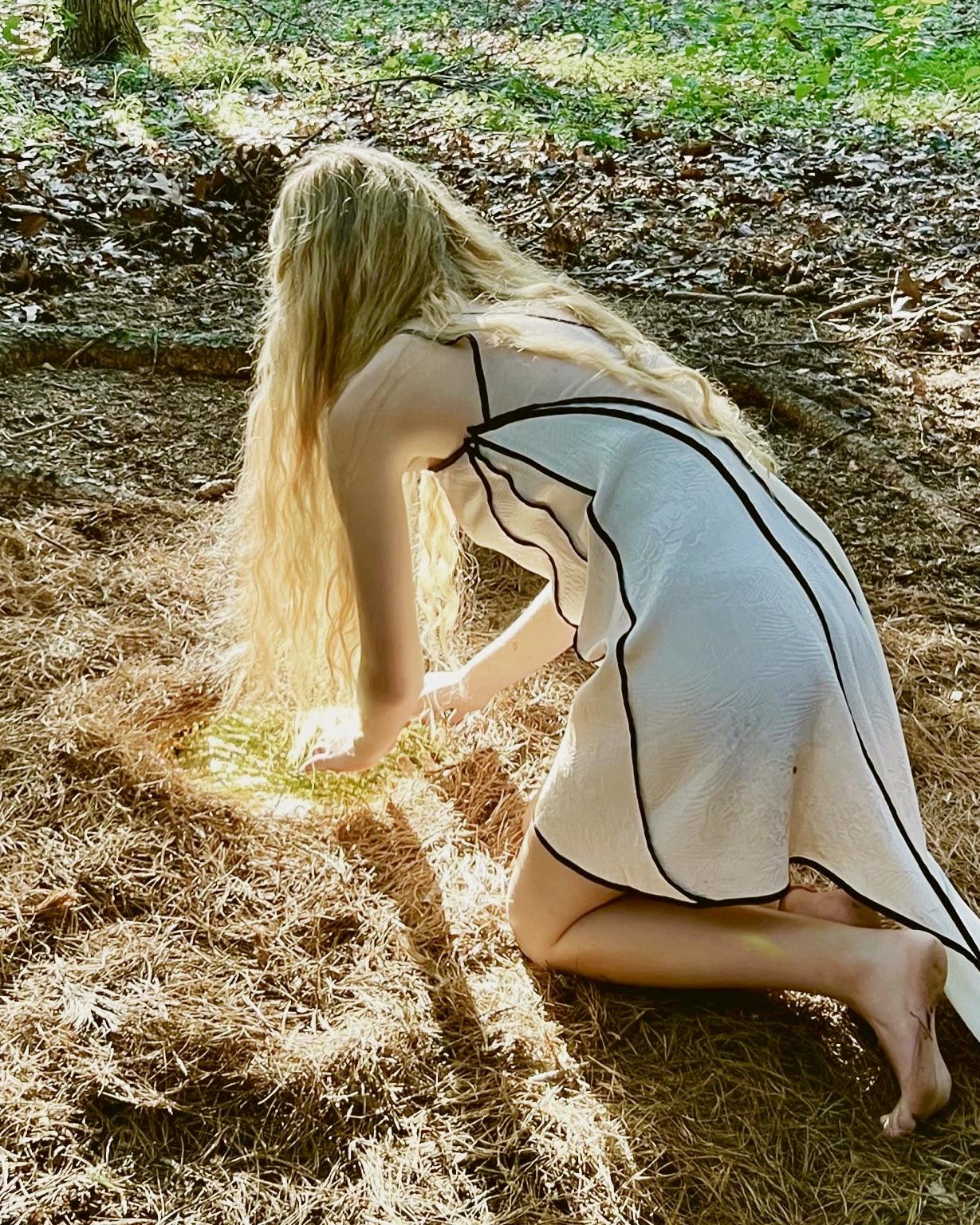
Film still from Forest of the Golden Dream. Photo by Rob Barriales.
Entéléchie, French for 'Entelechy,' comes from an old philosophical idea: potential becoming actual, a thing realizing the form it was capable of becoming. Joseph first encountered the word through John C. Portman’s Entelechy houses, which seemed to him like private cathedrals designed with cosmic coordinates baked into the structure. They were dream houses in the deepest sense: architecture built as a map of ascent.

John C. Portman's Entelechy II house, the inspiration behind the healing collection Les Potions D'Entéléchie.
For Joseph, the word became more personal. It named the golden path — the optimistic current that opens after death has been faced and survived.
This is where subtle energy becomes practical. Kundalini rising, in Joseph’s understanding, is the activation of sexual-creative force and its disciplined ascent through the body into vision. The point is vitality becoming direction. Entéléchie is that path rendered in perfume: the upward current after darkness, the golden corridor toward one’s most luminous possibility.
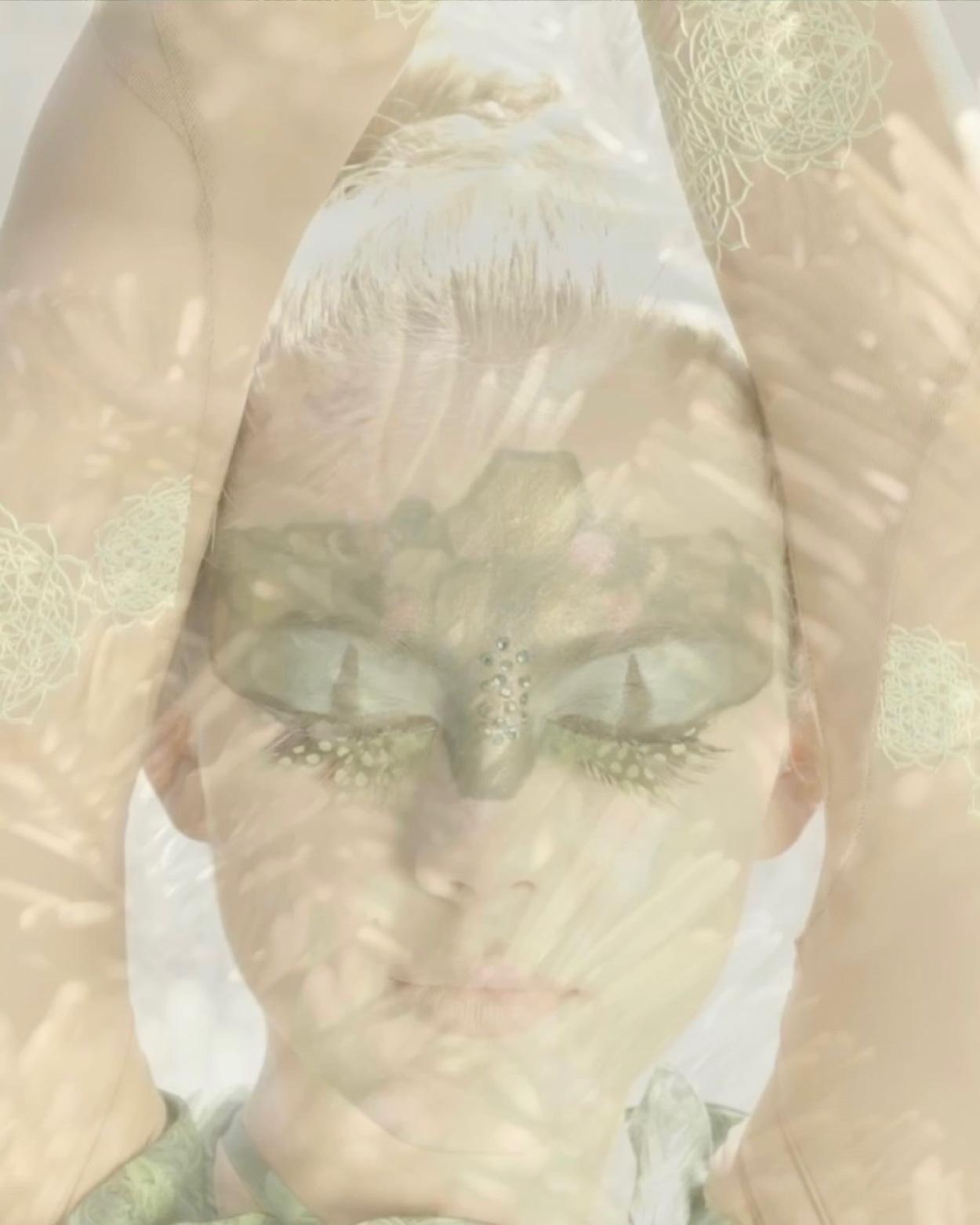
Forest of the Golden Dream film still. Photo by Rob Barriales.
Vitality, for Joseph, is the true gold. It is the luxury beneath luxury. It is true creative energy and the basis for charm as an attribute. It is the current that lets beauty, desire, work, love, and art continue. He knows this as a luxury expert among experts, and as someone who had to repeatedly rebuild his own charge from scarcity.
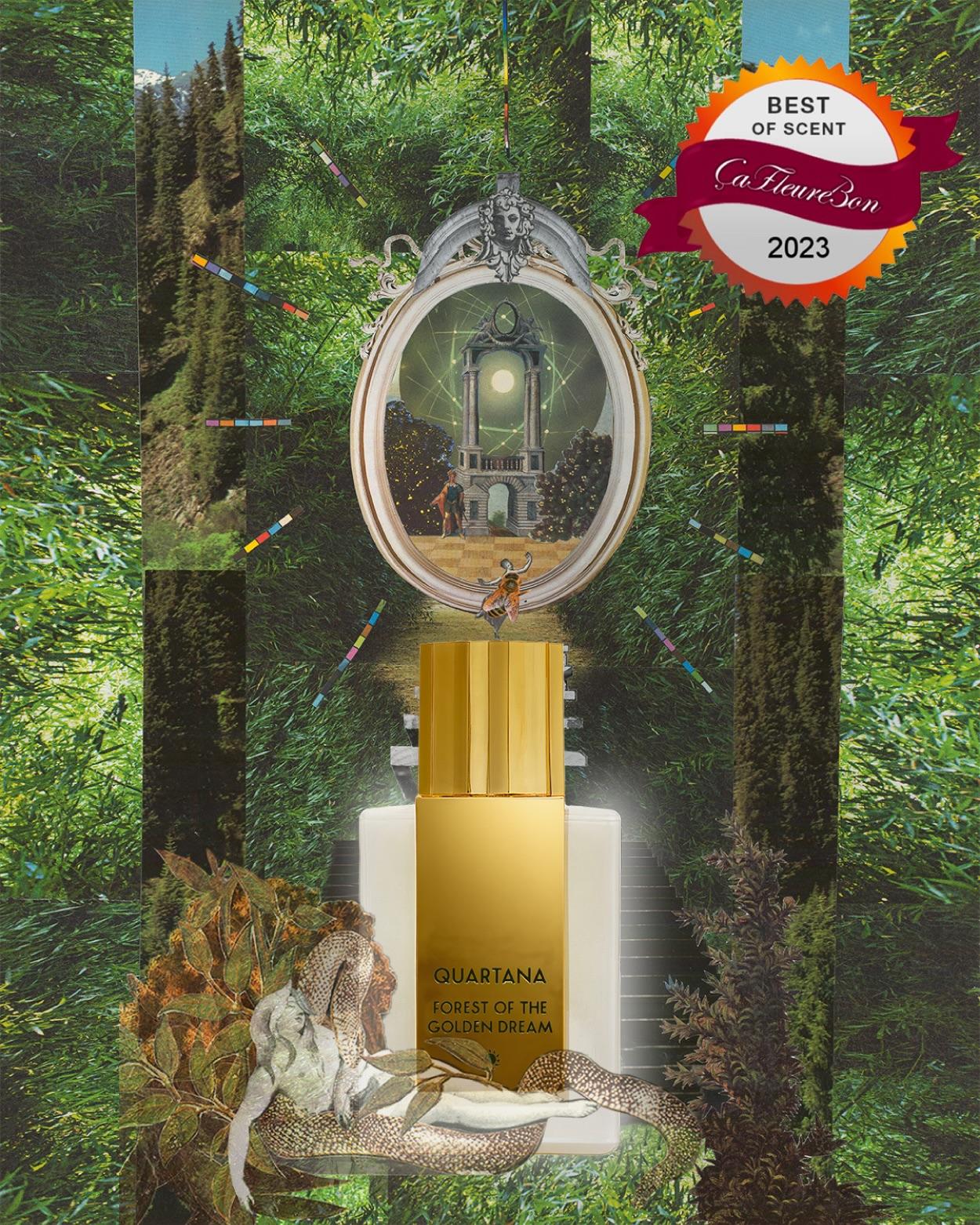
Forest of the Golden Dream original collage art by Carlo Zambotti.
Forest of the Golden Dream carries this doctrine through image and scent. Its film portrays a Kundalini-rising ritual, but the fragrance explains the idea more simply: the forest as a place where life force returns through attention. Conifer air steadies the body. Golden mimosa brings sunlight into the green. Sacred woods give the feeling of warmth moving upward.
Soleil Invisible renders inner radiance as hidden sun.
Beaut’Air treats air as presence, atmosphere, and healing respiration, a carrier of dreams into daylight.
The Entéléchie perfumes are antidotes to the Fatales potions in the deepest sense. After the poison flower comes the golden field. After the descent comes ascent. After survival comes a disciplined choice to become luminous again.
The STUMM433 project brought scent and sound into a single public proof.
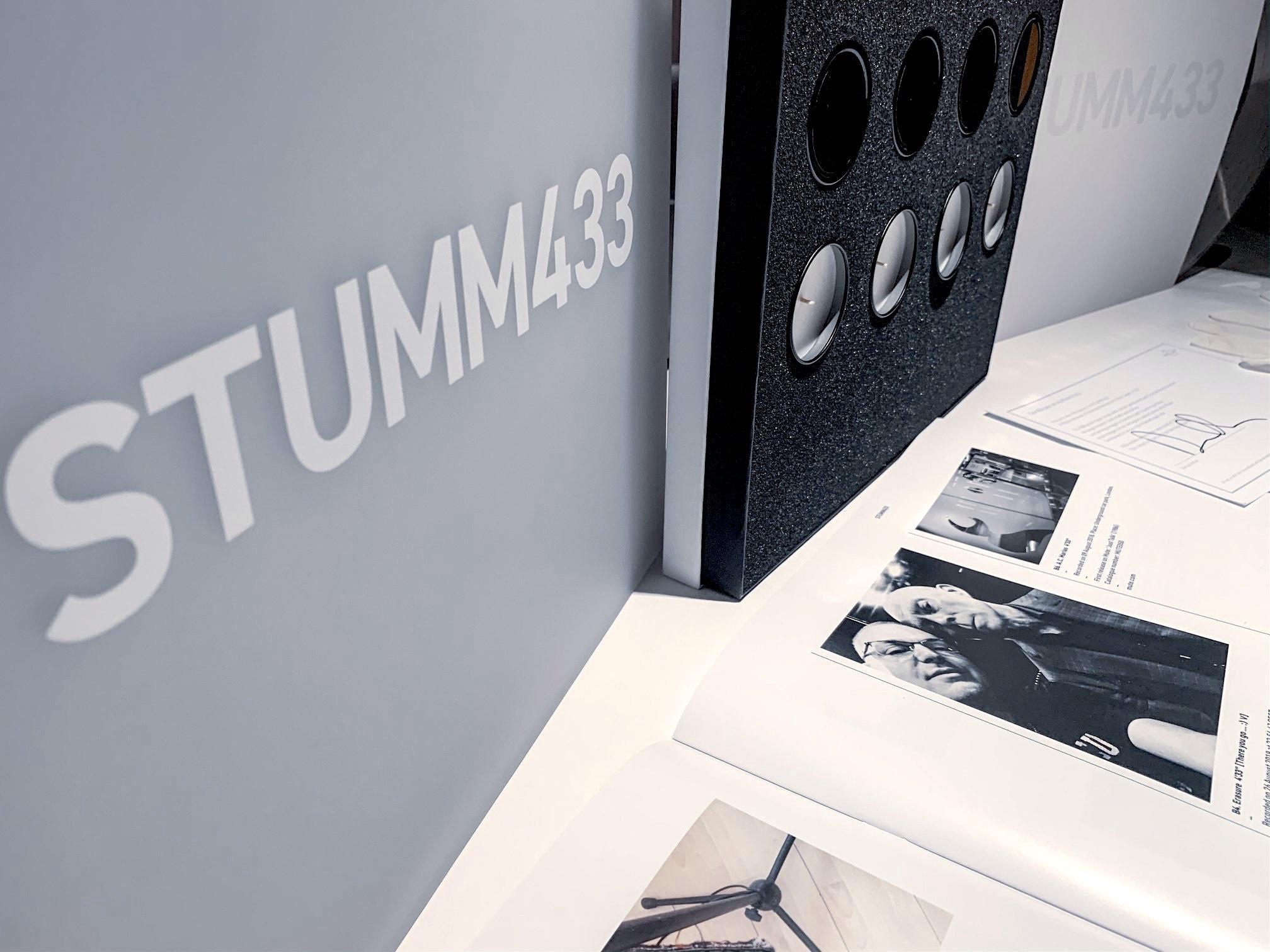
STUMM433 Box Set featuring 57 covers of John Cage's silent 4'33" composition and The Scent of Silence in candle form by Joseph Quartana.
MUTE Records, the aforementioned British label behind Depeche Mode, Yaz, ADULT., and many other electronic and post-punk acts, created STUMM433 as a tribute to John Cage’s 4’33”. Cage’s famous 1952 composition asks musicians to remain silent for four minutes and thirty-three seconds, making the sounds of the room — breath, coughs, chairs, air, attention — become the piece. As part of their 40th "anti-versary", MUTE invited each of their musicians to reinterpret that silence, then commissioned Joseph to create the scent component for the limited vinyl box.
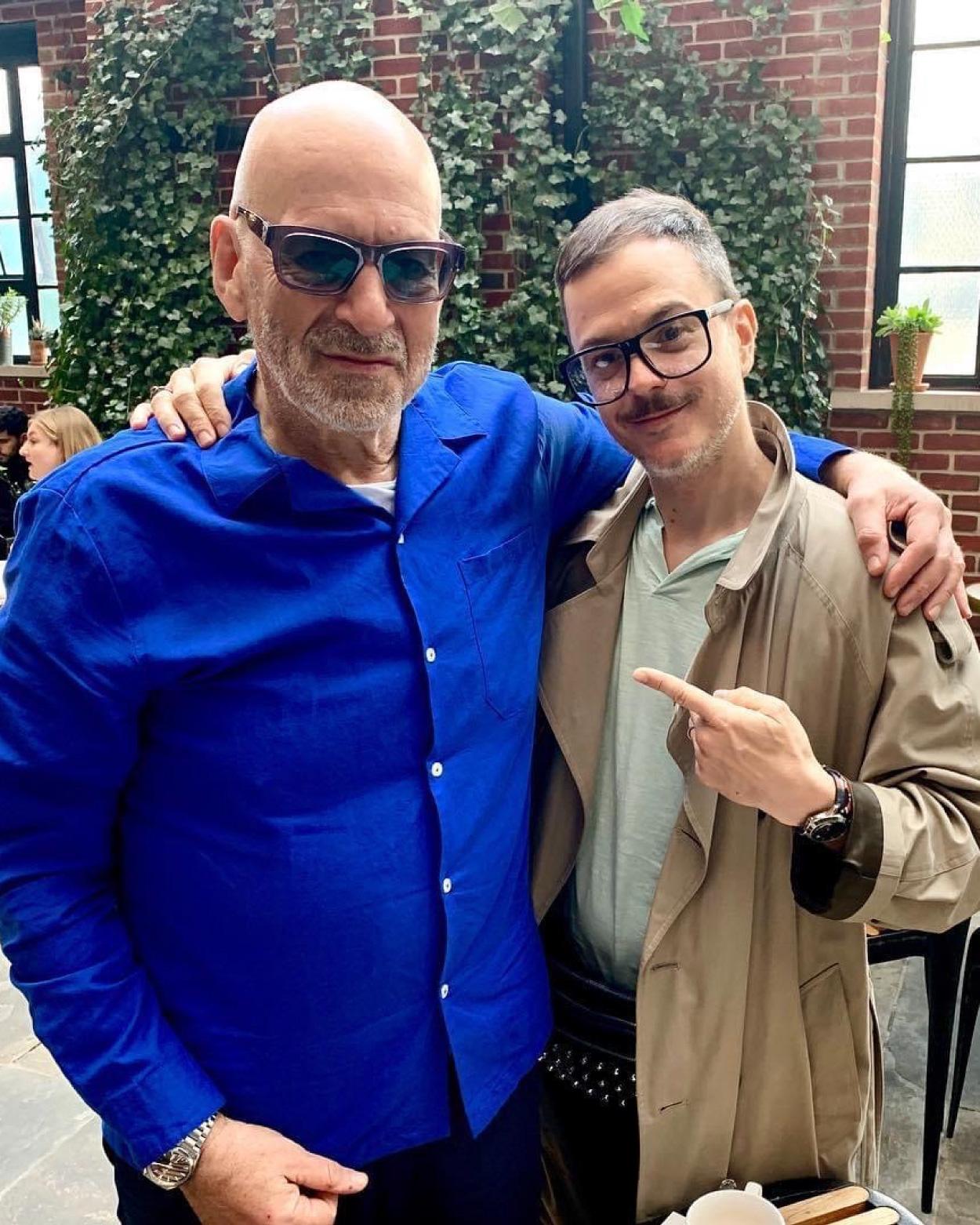
Daniel Miller of MUTE records and Joseph Quartana meet to discuss the scent component of STUMM433.
Joseph had loved Depeche Mode, Yaz, and the beautiful severity of MUTE Records long before fragrance became his main medium. He admired Depeche Mode for their emotional bravery, perfectionism, and the courage to release original work that carried an instantly recognizable identity from album to album, each record pushing off the last while remaining unmistakably itself.
For STUMM433, Joseph imagined silence as charged residue: A Shakespearean wooden theatre after an extraordinary performance, the players have left the stage, the audience has gone, yet the seats and walls still feel singed by what occurred. The sound is absent; the vitality still burns.
Later in April of 2026, BeautyMatter placed Joseph’s STUMM433 work inside a current industry movement toward scent-and-sound activations, but Joseph had been practicing the method for decades.
A song begins, alters the body, and leaves the room changed. A perfume does the same.
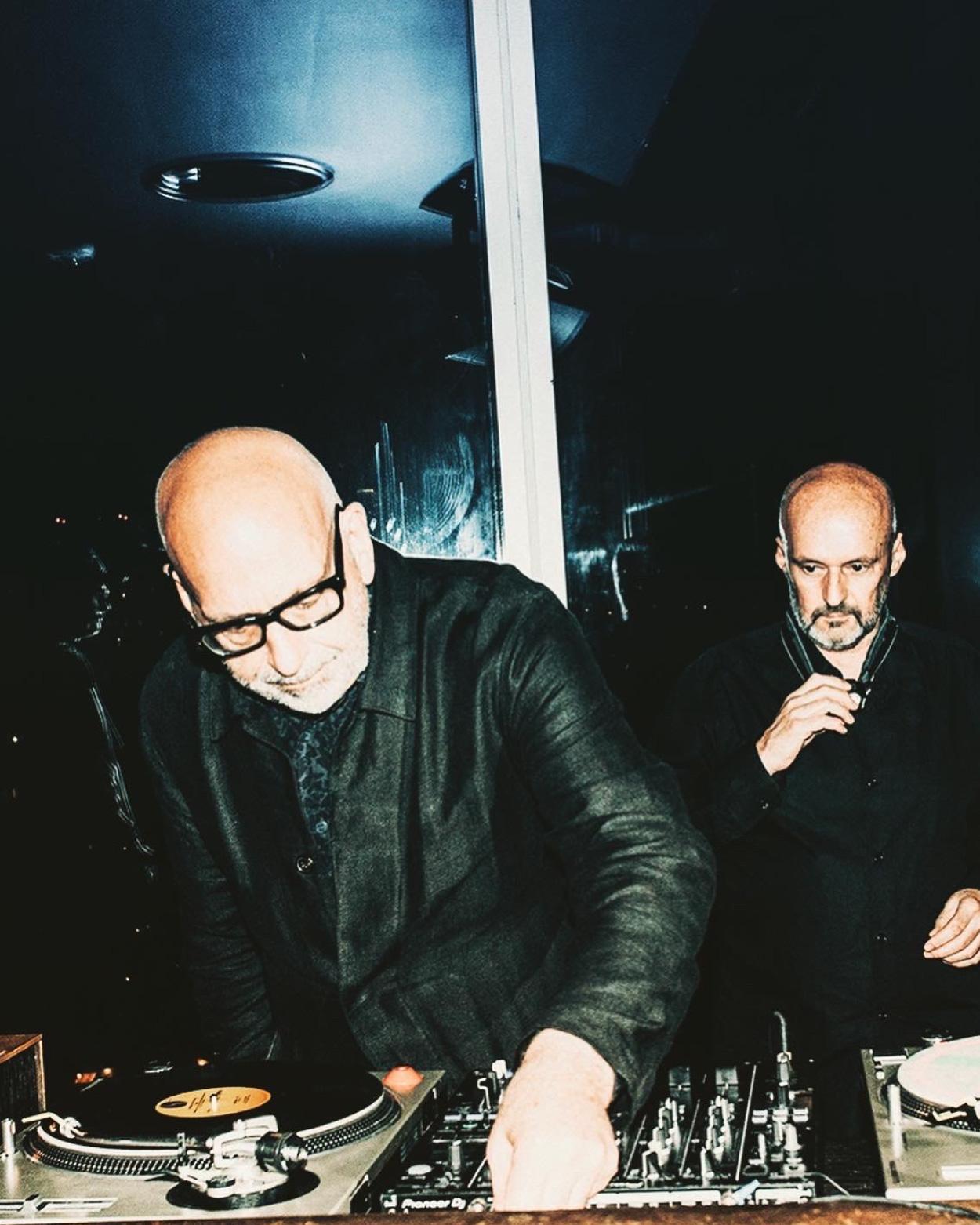
Daniel Miller performs his cover of John Cage's silent composition 4'33" as his alter-ego, The Normal.
At the STUMM433 launch, the silence lasted four minutes and thirty-three seconds. The candle made that silence physical. The room held white-noise hiss, minimal crowd murmur, and the scent of an atmosphere still glowing after an imagined performance.
The silent energy burns brightest.
PARFUMS QUARTANA is the inevitable conclusion of Joseph Quartana’s life in charged atmosphere.
Les Potions Fatales is the dark garden, the collection where poison becomes beauty with thorns. Les Potions D’Entéléchie is the antidote and golden field, the collection where vitality becomes the true luxury and the subtle current rises toward luminous becoming. Les Potions D’Arcanes is the crystal ball at the threshold, the collection where smoke, amber, ignition, and revelation become ascent.
The authorship is responsibility: the insistence that every visible and invisible element prepare the wearer to meet the perfume at full strength. The bottle and box hold the first threshold. The label and film extend the image. The score gives the perfume an official sound world. The ritual use, discovery path, proof, and page become the field that allows the scent to arrive intact.
Joseph’s life has moved from the velvet rope to the Silver Bedroom, from the black monolith of Seven to the buried storefront, from the strained inheritance of Six Scents to the poison garden, from the hospital bed to the golden path. The through-line is vision: seeing the invisible force inside each threshold and giving it form.
Joseph built a house inside that crack: where poison becomes perfume, beauty grows thorns, silence burns, vitality rises, the room becomes a field, and a life in atmosphere becomes scent on skin.
The clearest way into PARFUMS QUARTANA is with a Discovery Set.
Choose the Complete Discovery Set if you want the full house: all thirteen current fragrances and the broadest introduction to Joseph Quartana’s scent-worlds.
Choose the Magic Garden Discovery Set if you are drawn to Les Potions Fatales: dark romance, poisonous flowers, seduction, and the blind-judged award-winner, Poppy Soma.
Choose the Starlight Wellness Discovery Set if you are drawn to Les Potions D’Entéléchie: vitality, breath, inner radiance, and house favorite Forest of the Golden Dream.

All thirteen current fragrances of Parfums Quartana including Art & Olfaction award-winner Ierofante in one complete initiation.

Dark romance, fatal flowers, and nocturnal ritual. Nine forbidden blooms including Perfume Extraordinaire award-winner Poppy Soma.

Radiance, breath, & restoration. Three elixirs to elevate & inspire including the best-selling Forest of the Golden Dream, now in Clean formulation.